Explore the Content
- The Major Players: A Rundown of Key US Bases in Okinawa
- Why So Many? The Historical and Strategic Roots
- The Enduring Controversies: Safety, Noise, and Crime
- The Futenma Relocation Dilemma: The Plan That Can't Move Forward (or Be Canceled)
- Common Questions People Ask (Beyond Just the Number)
- The Bigger Picture: Okinawa in a Tense Region
That question – how many US bases are in Okinawa – pops up a lot. It seems straightforward, right? But the answer is a bit trickier than you might think, and it opens a door to a whole world of history, politics, and local sentiment. It's not just a number; it's a story about a tiny island prefecture shouldering a massive strategic burden.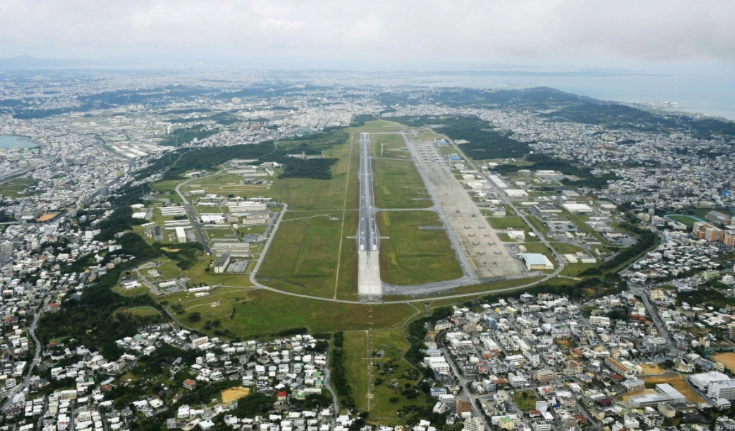
I remember first looking into this and being stunned by the sheer density. Okinawa makes up less than 1% of Japan's total land area, yet it hosts the overwhelming majority of the US military presence in the country. Wrapping your head around that fact is the first step to understanding the situation.
The short, direct answer is that there are approximately 31 US military facilities in Okinawa Prefecture. These range from massive, city-like air bases and sprawling marine camps to smaller communication stations, ammunition depots, and housing areas. The exact count can fluctuate slightly depending on how you define a "base" versus a "facility" or "site," but the number thirty-one is widely cited by official sources, including the Okinawa Prefectural Government and researchers tracking the issue.
But just throwing out the number 31 doesn't tell you much. Who's stationed there? What are these places used for? And why, of all places in Japan and Asia, is the concentration so incredibly heavy right here? Let's get into the details.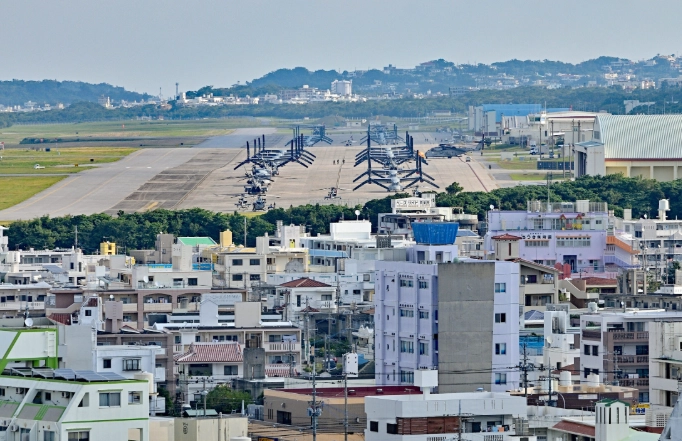
The Major Players: A Rundown of Key US Bases in Okinawa
While there are many facilities, a handful are truly gigantic and form the core of US power projection in the region. If you want to understand the US military footprint, you need to know these names.
| Base Name | Primary Service Branch | Key Function & Notable Units | Location (City/Town) |
|---|---|---|---|
| Kadena Air Base | US Air Force | The largest USAF base in the Asia-Pacific. Hub for intelligence, surveillance, reconnaissance (ISR), and air combat operations. Hosts the 18th Wing. | Kadena, Chatan |
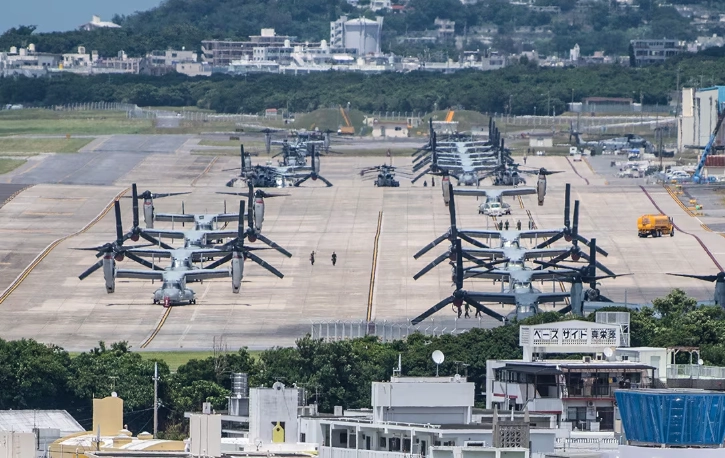
| Marine Corps Air Station Futenma | US Marine Corps | A vital helicopter base located right in the densely populated city of Ginowan. Its central location is the source of major controversy. | Ginowan |
| Camp Courtney | US Marine Corps | Headquarters for the III Marine Expeditionary Force (III MEF) and the 3rd Marine Division. | Uruma |
| Camp Foster | US Marine Corps / Multi-service | A major administrative and logistical hub. Houses the US Naval Hospital Okinawa and many support commands. | Okinawa City |
| Camp Schwab | US Marine Corps | Located on the less-populated Henoko coast. The planned relocation site for MCAS Futenma's functions, a project mired in decades of dispute. | Nago |
| Camp Kinser | US Marine Corps | Primary logistics and supply base for Marine forces on the island. | Urasoe |
| White Beach Naval Facility | US Navy | A strategic port facility that supports US Navy and Marine Corps amphibious operations. | Uruma |
Looking at that table, you start to see the pattern. It's heavily Marine Corps, with the Air Force's Kadena as the colossal airpower center. The Navy and Army have a presence too, but it's smaller. The US Army's main facility is Torii Station, home to intelligence and communications units.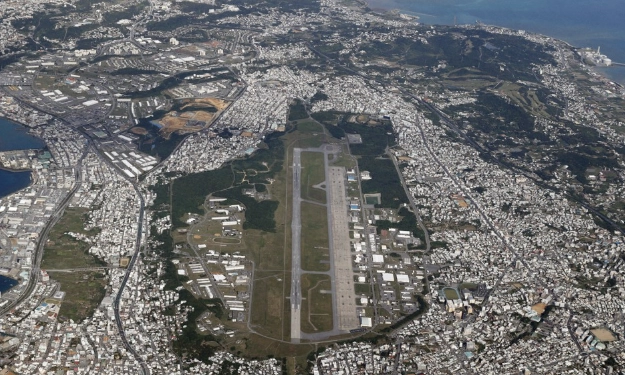
It's this collection of bases that forms the integrated answer to how many US bases are in Okinawa. They don't operate in isolation. Marines from Camp Schwab train, aircraft from Kadena provide cover, and supplies from Camp Kinser flow through White Beach. It's an ecosystem.
"When people ask me about the bases, I tell them to imagine a small town where the loudest neighbor's backyard takes up a third of the space, and their helicopters fly over your school playground. The number '31' isn't just a statistic here; it's the background noise of our daily lives." – A sentiment often echoed by Okinawan residents in local media reports.
Why So Many? The Historical and Strategic Roots
You can't talk about the bases without rewinding the clock. The current situation is a direct legacy of World War II and the Cold War.
After the brutal Battle of Okinawa in 1945, the islands came under direct US military administration until 1972, long after the rest of Japan regained sovereignty in 1952. During those 27 years, the US military seized and consolidated vast tracts of land for its bases. When Okinawa was finally returned to Japan, the US-Japan Security Treaty and related agreements ensured the bases remained, essentially freezing the wartime occupation footprint into a permanent posture.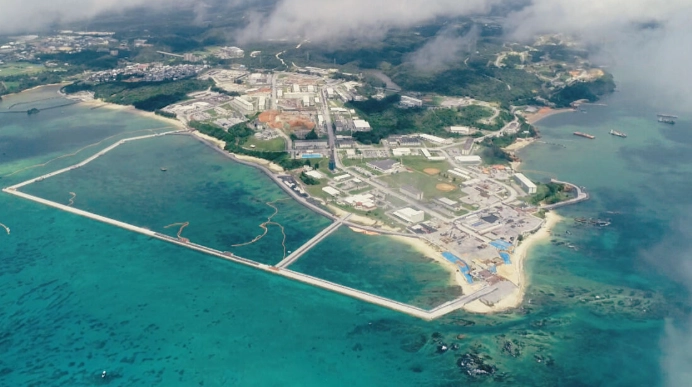
Strategically, the logic from a US perspective is starkly geographical. Look at a map. Okinawa is a chain of islands stretching southwest from mainland Japan towards Taiwan and the South China Sea. It's a unsinkable aircraft carrier positioned perfectly for responding to contingencies on the Korean Peninsula, in the Taiwan Strait, or throughout Southeast Asia. For military planners, it's an irreplaceable asset.
From the Japanese government's perspective, hosting these forces is the cornerstone of its alliance with the United States and a key component of its own national security, allowing it to benefit from the US security umbrella. The concentration in Okinawa, however distant from Tokyo, has been politically expedient for successive Japanese governments, as it minimizes the base-hosting burden on the main islands.
This leads to the core inequity. About 70% of all US military facilities in Japan are crammed into Okinawa Prefecture, which accounts for a mere 0.6% of the nation's land. That lopsided math is the source of enduring friction.
The Enduring Controversies: Safety, Noise, and Crime
Knowing how many US bases are in Okinawa is one thing. Living with them is another. The presence is not an abstract concept; it has daily impacts.
- Accidents and Safety: Aircraft crashes, both real and near-misses, are a deep-seated fear. The 2004 crash of a Marine helicopter into Okinawa International University adjacent to Futenma burned that fear into public memory. Every flight training exercise is watched with anxiety.
- Noise Pollution: This is constant. The roar of jet engines from Kadena and the thump of helicopter rotors from Futenma and other bases create severe noise pollution, affecting schools, hospitals, and homes. Studies have linked the noise to health issues and learning difficulties in children.
- Criminal Incidents: Crimes committed by US service members, though statistically not disproportionate to the population, have been high-profile and traumatic. The 1995 abduction and rape of a 12-year-old schoolgirl by three US servicemen triggered massive protests and remains a raw wound. Each new incident reignites public outrage.
- Environmental Concerns: From PFAS chemical contamination of local water sources (linked to firefighting foam used on bases) to damage to coral reefs and the endangered dugong population from construction projects like the one at Henoko, environmental degradation is a major complaint.
Frankly, the relationship between the local community and the bases is often tense. The economic benefits—jobs and local spending—are acknowledged, but many Okinawans feel they bear an unfair share of the risks for a security arrangement decided in Tokyo and Washington.
It's crucial to understand that the debate isn't monolithic. Opinions in Okinawa vary. Some rely on base-related income, others see the security guarantee as vital, but a consistent majority in prefectural polls and elections have expressed a desire for a reduction in the base burden and have opposed projects like the new base at Henoko.
The Futenma Relocation Dilemma: The Plan That Can't Move Forward (or Be Canceled)
No discussion of US bases in Okinawa is complete without the saga of MCAS Futenma. Dubbed "the most dangerous base in the world" due to its urban encirclement, a deal was struck in 1996 to return its land to Okinawa. The catch? It had to be relocated within Okinawa, to a new sea-based facility at Henoko, off Camp Schwab.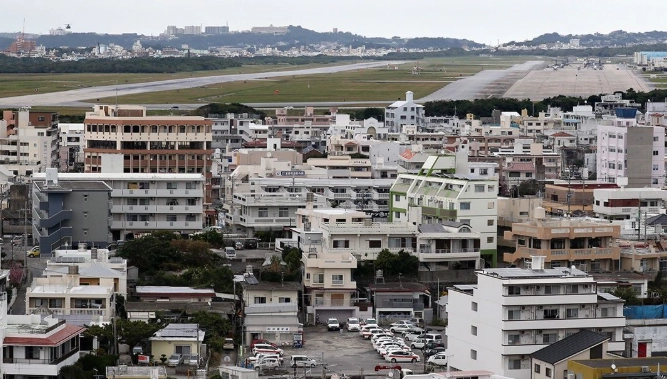
That was over 25 years ago. The project has been plagued by:
- Stiff Local Opposition: The people of Nago City and successive Okinawan governors have fiercely resisted it, holding referendums that show clear opposition.
- Engineering and Environmental Nightmares: The seabed at the construction site is famously soft—like mayonnaise, as some engineers described—requiring massive land improvement work. Coral relocation has been problematic, and the discovery of rare species has caused delays.
- Political Football: The issue has become a symbol of the wider base burden. Japanese governments push for it to demonstrate alliance management to Washington, while Okinawan leaders fight it as a matter of principle and local democracy.
The relocation is, in many ways, stuck. Billions have been spent, construction creeps forward amidst protests and legal battles, but its completion seems perpetually distant. It exemplifies the intractable nature of the base issue: everyone agrees Futenma's current location is problematic, but the proposed solution creates a whole new set of problems.
Common Questions People Ask (Beyond Just the Number)
The Bigger Picture: Okinawa in a Tense Region
Ultimately, the question of how many US bases are in Okinawa is a microcosm of larger geopolitical tensions. As China's military power grows and its activities around Taiwan and in the East and South China Seas intensify, the strategic value of Okinawa in the eyes of US and Japanese planners only increases.
This creates a painful bind for Okinawa.
On one hand, it finds itself on the potential front line of any major conflict, making the security provided by the bases a tangible, if double-edged, reality. On the other hand, this very positioning makes it a target and perpetuates the heavy military footprint that many residents resent.
The bases are not a static relic. They are constantly being updated. The deployment of MV-22 Ospreys (despite local safety concerns), plans to station longer-range missiles, and the integration of Okinawa-based forces with other US assets in Japan and Guam all point to an evolving, not diminishing, role.
So, when you land on the number 31, understand it's not just a count of properties. It's a measure of history, of strategic calculation, and of a local community's decades-long struggle for a voice. It's a number that tells a story of war's enduring legacy, of alliance management, and of the clash between global strategy and local life. The bases are a fact of life in Okinawa, but the debate over their size, scope, and very existence is as alive today as it has ever been.
Getting a clear answer on how many US bases are in Okinawa is the easy part. Understanding what that number means—that's where the real discussion begins.

Comments