Quick Navigation
Let's cut to the chase. You've probably seen those glossy videos of life in Tokyo or Kyoto and wondered, "Can I actually afford that?" Talking about the life cost in Japan in US dollars isn't just about converting yen. It's about understanding where your money goes in a country that can be surprisingly affordable in some ways and shockingly expensive in others. I remember my first grocery bill in Tokyo – staring at a $7 apple (yes, a single apple) while the delicious take-out bento next to it was only $4. It makes no sense until you live there.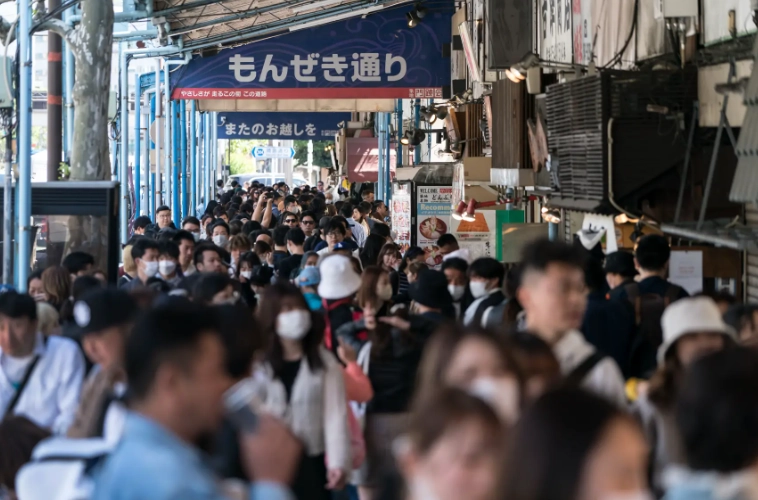
This guide isn't a theoretical list. We're going to break down real numbers, city by city, category by category, all translated into USD to make it tangible. Whether you're a student, a remote worker, or planning a long-term move, getting a grip on the actual life cost in Japan in US dollars is your first step to avoiding budget shock.
The Core Pillars of Your Japan Budget in USD
We'll tackle the big four: Housing, Food, Transportation, and Miscellaneous. I'll give you ranges, from frugal to comfortable, and point out where you can save and where you really shouldn't skimp.
1. Housing & Rent: Your Biggest Variable
This is the beast. In major cities, especially Tokyo, housing will consume the largest chunk of your life cost in Japan in US dollars. The type, size, and location of your apartment cause the price to fluctuate massively.
Tokyo Reality Check: A modest, modern one-room apartment (20-25 sqm) in a popular expat ward like Minato or Shibuya can easily run you $1,400 to $2,200 per month. Move 30-40 minutes out by train to wards like Adachi or Katsushika, and similar places drop to $700-$1,000. The trade-off is commute time and neighborhood vibe.
Outside Tokyo, things get more reasonable. In Osaka, you might find a decent place for $600-$900. In Kyoto, prices are creeping up due to tourism, but still below Tokyo. In smaller regional cities (Sendai, Hiroshima), you can find very nice apartments for $400-$700.
Don't forget the initial moving-in costs, which can be a brutal one-time hit. "Key money" (gratuity to landlord), deposit, agent fee, and first month's rent can often equal 4 to 6 months' worth of rent. A $1,000/month apartment might require $5,000 upfront. It's a system that catches many newcomers off guard.
My first apartment search in Japan was a lesson in humility. I had a budget in mind, but seeing the tiny size of apartments in my price range was a cultural reset. I learned to value location over space.
2. Food & Groceries: Where You Can Control Costs
Food is where Japan can be both a budget-drain and a saver. It entirely depends on your habits.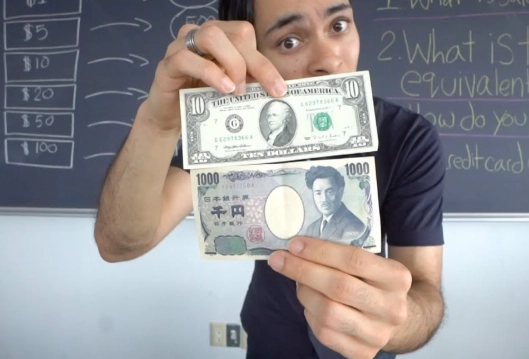
Cooking at Home: Groceries aren't cheap, especially for imported goods. Meat, cheese, and Western-style bread can be pricey. However, local produce (in season), tofu, fish, and rice are reasonably priced. A weekly grocery bill for one person cooking most meals can range from $50 to $100.
Eating Out & Convenience: This is Japan's secret budget weapon. Why cook when you can get a filling, delicious bowl of ramen for $7-$10? Gyudon (beef bowl) chains like Yoshinoya serve meals for $4-$6. Convenience stores (7-Eleven, FamilyMart, Lawson) are lifesavers with quality ready meals, sandwiches, and onigiri for $1-$4 each. If you're smart, you can eat very well without blowing your budget.
Sample Daily Food Cost (USD):
- Frugal (conbini breakfast, cheap lunch set, home-cooked dinner): $15-$25
- Moderate (cafe breakfast, mid-range lunch, dinner out): $35-$55
- Comfortable (dining out freely): $60+
3. Transportation: Efficient but Adds Up
Japan's public transport is legendary, but the costs are very real. Almost no one in big cities drives daily. Your train or subway pass is a fixed cost.
A monthly commuter pass between your home and nearest station to your workplace/school typically costs between $50 and $150, depending on distance. On top of that, budget for weekend travel on other lines, which can be $5-$15 per round trip.
For intercity travel, the Shinkansen (bullet train) is fantastic but expensive. A one-way ticket from Tokyo to Osaka is around $130. Buses are the budget alternative, often half the price or less, but take 3-4 times longer.
Cycling is incredibly popular and a huge money-saver for local trips. You can buy a decent used bike for $100.
4. Utilities, Phone, & Miscellaneous
These are the smaller, predictable costs that form the baseline of your life cost in Japan in US dollars.
- Utilities (Electricity, Gas, Water): For a small apartment, expect $100-$200 per month total. Air conditioning in summer and heating in winter can spike the electricity bill.
- Mobile Phone: Major carriers (Docomo, SoftBank, au) can be pricey ($50-$80/month). MVNOs (like IIJmio, LINE Mobile) using the same networks offer plans as low as $15-$25 per month for decent data.
- Internet: Fiber optic (Flets Hikari) is standard and costs $40-$60 per month.
- National Health Insurance: If you're a resident, this is mandatory. Premiums are based on your previous year's income. For an average earner, it's roughly $150-$250 per month. It covers 70% of most medical costs.
Watch Out for the "Small" Stuff: Your daily coffee ($4), vending machine drinks ($1.50), museum entries ($10), and weekend activities quietly nibble away at your budget. A month of small, unplanned purchases can easily add $100-$200.
City-by-City Monthly Cost Breakdown in USD
Let's put it all together. The tables below estimate a total monthly life cost in Japan in US dollars for a single person. "Frugal" means careful budgeting, minimal dining out, and shared or small housing outside prime areas. "Comfortable" allows for a nicer apartment in a good location, regular eating out, and leisure activities.
| City | Frugal Lifestyle (Monthly USD) | Comfortable Lifestyle (Monthly USD) | Notes & Vibe |
|---|---|---|---|
| Tokyo (23 Wards) | $1,800 - $2,400 | $2,800 - $4,000+ | Housing is the killer. Entertainment and food options are endless. The "comfortable" range has a high ceiling. |
| Osaka | $1,400 - $1,900 | $2,200 - $3,000 | More affordable than Tokyo, with a famously outgoing culture. Food paradise. |
| Kyoto | $1,500 - $2,000 | $2,300 - $3,200 | Tourist inflation is real, especially in central areas. Quieter than Osaka/Tokyo. |
| Fukuoka | $1,200 - $1,600 | $1,800 - $2,500 | A rising star for expats. Great balance of city life and affordability. Warmer climate. |
| Sendai / Sapporo | $1,100 - $1,500 | $1,700 - $2,300 | Regional hubs. Significantly lower housing costs. Closer to nature, fewer international amenities. |
These figures are for a single person. Couples can save significantly on per-person housing costs. Families, of course, have a completely different calculus with schooling being a major potential expense (international schools can cost $15,000-$30,000 per child per year).
The Hidden Costs & Savings No One Talks About
The Hidden Costs:
- Gift Culture (Omiyage): Returning from a trip? You're expected to bring small gifts for coworkers or friends. It's a small but recurring social expense.
- Clothing & Shoes: If you have larger feet or a taller/broader build, finding affordable clothing can be difficult and may require ordering online.
- Start-up Costs: We mentioned the apartment key money. Also, furnishing an empty apartment (even basics like a fridge, washing machine) can cost $1,000+ initially, though second-hand markets are active.
The Secret Savings:
- 100-Yen Shops: Stores like Daiso and Seria are incredible. You can get kitchenware, stationery, basic food items, and more for roughly $1 each. They are a new resident's best friend.
- Free & Low-Cost Entertainment: Temple and shrine grounds are often free to enter. Parks are beautiful and public. Many museums have one free-entry day per month. Hiking is free.
- National Insurance Value: While it's a cost, the coverage is excellent. A doctor's visit with medication might only cost you $10-$30 out-of-pocket.
Your Burning Questions on Japan's Cost of Living (Answered)
Can I live in Japan on $1000 USD per month?
Realistically, no. Not as a resident. Even in the cheapest regional cities, after rent, utilities, insurance, and basic food, $1000 would be an extreme, unsustainable struggle. You might manage it as a very frugal student in a shared house in a cheap area with a scholarship covering tuition, but it would be a bare-bones existence. For a working adult, a budget starting around $1,500 is a more realistic minimum.
Is Tokyo more expensive than New York or London?
It depends. Housing in central Tokyo is often cheaper than central London or Manhattan for comparable size/quality. However, daily food costs (groceries and eating out) can feel higher in Tokyo. Overall, the total life cost in Japan in US dollars for Tokyo is comparable to other global megacities, but the distribution is different. Public transport is far more expensive in London, for example.
What's the single biggest mistake people make when budgeting for Japan?
Underestimating the initial moving-in costs for housing (the 4-6 months' rent upfront) and overestimating how much they'll cook at home. The convenience and quality of cheap eateries often win out, so your food budget should reflect a mix.
How much should I save before moving?
Beyond your flight, aim to have at least $8,000 to $12,000 USD saved for the transition. This will cover your massive initial housing deposit, first month's expenses while you set up, basic furniture, and a buffer while you find your feet (and potentially a job). Trying to do it with less is incredibly risky.
How to Track and Plan Your Own Japan Budget
Forget complex spreadsheets at first. Just list your expected fixed costs (Rent, Insurance, Phone, Commuter Pass) and subtract that from your expected monthly income (after tax). What's left is for variable costs (Food, Utilities, Leisure).
Use budgeting apps that work internationally. Track your spending for the first three months religiously. You'll quickly see your personal patterns—maybe you spend more on coffee than you thought, or you discover you love exploring cheap local izakayas.
For authoritative, up-to-date data to inform your planning, you can't beat official sources. The Statistics Bureau of Japan provides macro-economic data, including consumer price indices. For more localized, crowd-sourced cost comparisons, sites like Numbeo are useful, though treat them as a guide, not gospel.
The key is flexibility. Your first budget will be wrong. The cost of living in Japan in USD isn't a static number; it's a living thing that changes with the exchange rate, your location, and your personal habits.
My final piece of advice? Budget for joy. If you move to Japan and only pay bills, you'll miss the point. Make sure your calculation for the life cost in Japan in US dollars includes a line item for that amazing sushi dinner, the trip to an onsen town, or the perfect ceramic bowl you find at a market. That's what you're really paying for.
So, is Japan expensive? Yes and no. It's precise. Almost every cost is transparent and you get what you pay for—efficiency, safety, quality, and service. By understanding the real breakdown of the life cost in Japan in US dollars, you move from anxiety to control. You can make informed choices: a smaller apartment for a better location, more conbini meals to afford weekend trips, a regional city over Tokyo for long-term savings.
Start with the numbers here, but make them your own. Your Japan life, and its cost, is waiting to be designed.

Comments