Quick Guide
- Housing: Shoeboxes vs Sprawling Suburbs
- Food & Groceries: The Daily Grind
- Transportation: Trains vs. Cars
- The Big Three: Healthcare, Taxes, and Education
- Lifestyle & Hidden Costs: The Stuff They Don't Tell You
- Common Questions Answered (The Stuff You're Actually Searching For)
- So, What's the Final Verdict on Life Cost in Japan vs US?
You know that feeling when you're scrolling online, trying to figure out if you could actually afford that dream of living abroad? Maybe it's a job offer in Osaka, or just a craving for a life change. The big question always comes down to money. Life cost in Japan vs US – it's a search that brings up a ton of numbers, but not always the full picture. I've been down that rabbit hole myself, and let me tell you, comparing apples to oranges doesn't even begin to cover it. We're comparing sushi to hamburgers here.
Everyone just throws out an index number like "Tokyo is 10% cheaper than New York!" and calls it a day. But what does that actually mean for your weekly grocery bill, your tiny apartment, or your train ride to work? Those index numbers feel sterile. They don't tell you about the shock of paying $8 for a single bell pepper in Tokyo, or the relief of finding a filling lunch for under $5. They don't mention that your massive American salary might shrink, but so could your stress levels about healthcare. It's messy, personal, and full of trade-offs.
So, let's ditch the generic lists. We're going to dig into the nitty-gritty, category by category, and talk about what the life cost in Japan vs the United States really feels like on the ground. I'll share some of my own head-scratching moments too. This isn't about declaring a winner; it's about giving you the map so you can decide which path works for your wallet and your life.
Housing: Shoeboxes vs Sprawling Suburbs
This is usually the biggest shocker, and it defines your daily reality more than anything else. The difference in philosophy is stark.
In Japan, especially in cities like Tokyo and Osaka, space is a premium commodity. You pay for location and convenience, not square footage. My first apartment in Tokyo was, to be brutally honest, the size of a large American walk-in closet. The "kitchen" was a single burner next to the sink. But it was spotless, safe, and a 7-minute walk from the train station. The trade-off was clear. Rent in major Japanese cities can seem reasonable until you realize what you're getting. Outside the city centers, prices drop significantly, and you can find more space.
In the US, you generally get more physical space for your money, especially in suburban and rural areas. But you pay for it in other ways—commutes, car dependency, and higher utility costs to heat and cool that larger space. The quality can be incredibly variable, too. A cheap apartment in a US city might come with... let's say, character (and by character, I mean outdated appliances and questionable neighbors).
Let's look at some rough averages. Remember, these are ballpark figures that can swing wildly based on the exact neighborhood.
| Housing Cost | Japan (Tokyo Central) | USA (NYC Center) | Notes & Reality Check |
|---|---|---|---|
| 1-Bedroom Apartment (City Center) | ¥130,000 - ¥200,000+ ($850 - $1,300+) | $3,500 - $5,000+ | Japanese listings are often smaller (20-40 sq m). NYC price is for a "standard" 1BR. Tokyo offers more options in this lower range, but quality/size varies. |
| 1-Bedroom Apartment (Outside Center) | ¥70,000 - ¥120,000 ($450 - $780) | $2,200 - $3,200 | This is where Japan can shine. Commuter towns 30-40 mins from Tokyo offer much better value. In the US, "outside center" might still mean a very expensive suburb. |
| Utilities (Monthly for 1 person) | ¥15,000 - ¥20,000 ($100 - $130) | $150 - $250 | Japan is generally more efficient (smaller spaces, efficient appliances). US costs spike with extreme heating/cooling needs. |
| Initial Move-in Costs | Very High: Often 5-6x rent (Key money, deposit, agent fee) | Moderate-High: 1st month, last month, security deposit (1-3x rent) | This is a massive, often overlooked barrier in Japan. You need a big chunk of cash upfront. In the US, it's more standardized but can still be steep. |
See what I mean? The monthly rent in Tokyo might look like a steal compared to NYC, but that initial key money (a non-refundable "thank you" fee to the landlord – yes, really) is a gut punch. It's a classic example of how the life cost in japan vs us isn't just about monthly outgoings.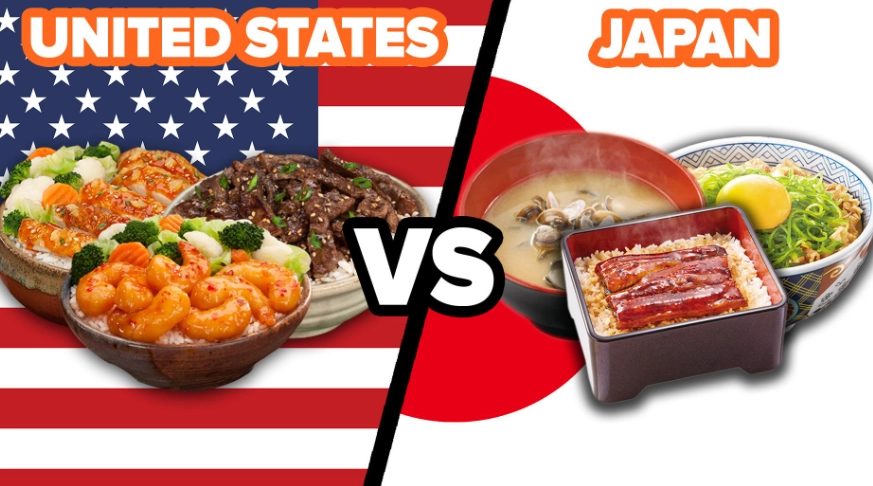
Food & Groceries: The Daily Grind
This is my favorite category because it's where daily life happens. Your food budget will look and feel completely different in each country.
Eating Out
Japan is a paradise for affordable, quality eating out. You can get a fantastic, filling bowl of ramen for ¥1,000 ($6.50). A set lunch (teishoku) with rice, miso soup, a main, and sides often runs ¥800-¥1,500. Convenience store food (konbini) is legitimately good and cheap—a lifesaver. The mid-range is where Japan excels. However, fine dining and Western-style food can get very expensive quickly.
In the US, the range is wider. Fast food is cheap (though arguably lower quality than a Japanese konbini meal). A decent sit-down restaurant meal with a tip will almost always cost more than its Japanese equivalent. Tipping culture itself adds a significant 15-25% hidden cost that doesn't exist in Japan. That $15 burger quickly becomes an $18 burger.
Groceries
This is a mixed bag. In Japan, some things are surprisingly cheap:
- Rice, tofu, soy sauce, noodles (the staples).
- Seasonal local vegetables when they're in abundance.
- Fish can be reasonable, depending on the type.
And some things are eye-wateringly expensive:
- Fruit (a single melon for $50 is a famous trope, but even apples and grapes are pricey).
- Cheese, butter, and other dairy products.
- Beef (except for the cheaper cuts like offal for yakiniku).
- Any imported Western product (cereal, peanut butter, etc.).
In the US, groceries benefit from economies of scale. You can buy in bulk at warehouse stores and save a ton. The variety of packaged and processed foods is immense and often cheap. Fresh produce quality and price vary greatly by region and season, but it's generally more affordable for things like berries, leafy greens, and large quantities of meat. The trade-off? You have to be more careful about quality and sourcing.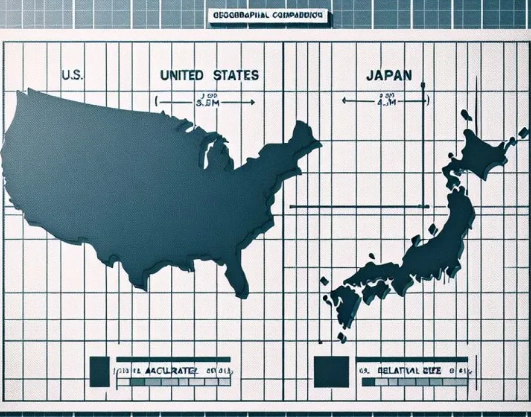
Personal Grocery Hack: In Japan, I learned to shop the perimeter of the supermarket and the local greengrocer right before closing for discounts. In the US, my budget was saved by buying a freezer and stocking up on sale meat. Two different strategies for two different food landscapes.
Transportation: Trains vs. Cars
This is a fundamental lifestyle difference that drastically affects your cost of living equation.
In Japan's cities, you don't need a car. The public transit system is extensive, reliable, clean, and safe. A monthly commuter pass between your home and office station is a fixed, predictable cost (often around ¥10,000-¥20,000, or $65-$130, depending on distance). It's not always cheap, but it's efficient and eliminates many other costs. Taxis are expensive and a last resort. Owning a car in a city is a luxury and a hassle, with parking fees that can rival rent.
In most of the USA, you absolutely need a car. This is a massive, often underestimated part of the life cost in japan vs the US. It's not just the car payment. It's insurance (which can be very high, especially for young drivers), gas, maintenance, parking, tolls, and registration fees. Public transit exists in major cities but is often less comprehensive and reliable than in Japan. In cities like NYC or Chicago, you can live car-free, but you'll likely pay a premium in rent to do so.
So, while your monthly train pass in Japan might seem like a big line item, compare it to:
$300 (car payment) + $150 (insurance) + $120 (gas) + $50 (parking) + $50 (maintenance fund) = $670+ per month for a basic car in the US. Suddenly, the train pass looks different.
The Big Three: Healthcare, Taxes, and Education
Now we get into the heavyweights—the costs that can make or break a budget long-term.
Healthcare
Japan has a universal national health insurance system. Everyone must enroll. You typically pay 30% of medical costs, with the government paying 70%. There are also monthly premiums based on your income (usually a few hundred dollars per month for an average salary). The key is predictability and a cap on monthly out-of-pocket expenses for most people. A doctor's visit might cost you $10-$30. It's a system focused on accessibility.
The US system is... complex and often frighteningly expensive. If you have a good job with excellent employer-sponsored insurance, your out-of-pocket costs might be manageable (though premiums, deductibles, and co-pays add up). If you're self-employed, between jobs, or have a plan with high deductibles, you are vulnerable to crippling medical debt. A simple emergency room visit can cost thousands. This uncertainty is a massive financial and mental burden that doesn't exist in Japan.
It's a major pain point.
Taxes
Both countries have progressive tax systems. Japan's income tax rates are progressive and can be high at the top end, but residents also pay a flat-rate Residence Tax (about 10%) to their local municipality. Consumption Tax (like sales tax) is currently 10% (8% on some food items).
US federal income tax rates are also progressive. However, you must also factor in state income taxes (which vary from 0% to over 13%), and local sales taxes (which vary by city and county). Property taxes on homes are also generally higher in the US than in Japan.
It's a wash for most middle-income earners, but high earners might pay more in Japan, while in the US your tax burden depends heavily on which state you call home.
Education
If you have or plan to have children, this is crucial.
Public education in Japan is generally of good quality and is free from elementary through high school (though there are costs for lunches, uniforms, and activities). The intense pressure for after-school tutoring (juku) is a significant optional but common extra cost.
In the USA, public school quality is hyper-local, tied to property taxes in your school district. This leads to huge disparities. To access the best public schools, you often need to live in an expensive area—so you're paying through high housing costs. Private school tuition is extremely expensive, often $20,000-$50,000+ per year per child.
For university, both countries have high costs, but the student debt crisis is uniquely American in scale.
Lifestyle & Hidden Costs: The Stuff They Don't Tell You
This is where your personal habits will dictate the winner in the life cost in japan vs us debate.
- Consumer Goods & Electronics: Often cheaper in the US, especially during sales. Japan has great electronics but they can be pricey for the latest models.
- Clothing: Similar for basics, but Japanese fashion can be expensive. The US has more frequent deep discounts and outlet shopping.
- Entertainment: Movie tickets are comparable. Gym memberships can be shockingly expensive in Japan (often $80-$100/month for a good club). In the US, you have a huge range from budget to luxury.
- Alcohol: Surprisingly affordable in Japan (cheap beer, sake, chuhai). In the US, it depends on state taxes, but going out for drinks adds up fast with tipping.
- The "Time is Money" Factor: In Japan, convenience saves time (excellent public transit, ubiquitous konbini, efficient services). In much of the US, you spend more time driving, maintaining a house/car, and dealing with bureaucratic or service inefficiencies. What's your time worth?
Common Questions Answered (The Stuff You're Actually Searching For)
So, What's the Final Verdict on Life Cost in Japan vs US?
It's frustrating, but there isn't one. It's like asking if motorcycles are cheaper than sedans. It depends on the model, the road, and the driver.
If you value ultra-convenient public transit, affordable daily meals out, predictable healthcare, and are okay with smaller living spaces, Japan's cost structure might align better with your lifestyle, and your overall financial risk might be lower.
If you prioritize large personal living space, driving your own car, buying groceries (especially dairy, beef, and imported goods) in bulk, and have access to excellent employer-sponsored US healthcare, you might find parts of the US more affordable for your specific habits.
The real takeaway? Don't just look at cost of living indices. Make a personalized budget. List your non-negotiables. How much space do you really need? Is a car freedom or a burden? How often do you eat steak or buy imported cheese? Do you have a medical condition that makes predictable healthcare costs vital?
Run the numbers for your life, not an average. That's the only way to truly answer the question of life cost in japan vs us for you. For some, the math points clearly to the neon-lit streets of Tokyo. For others, it's the open road of America. Now you've got the tools to do the math yourself.



Comments