Explore the Guide
- Why You Should Bother Looking for Unique Japan Spots
- Getting Off the Beaten Path: A Quick Reality Check
- The List: 10 Unique Places That Stuck With Me
- Planning Your Trip to These Unique Japanese Destinations
- Cultural Etiquette for Off-the-Beaten-Path Japan
- Frequently Asked Questions (FAQs)
- Final Thoughts: The Reward of the Road Less Traveled
Let's be honest. When you think of Japan, your mind probably jumps to the scramble crossing in Shibuya, the Fushimi Inari gates in Kyoto, or maybe the deer in Nara. Don't get me wrong, those are iconic for a reason. But after my third trip, I found myself craving something different. I wanted the Japan that locals whispered about, the spots that didn't make it onto every Instagram feed, the places that felt like a secret even if they technically weren't.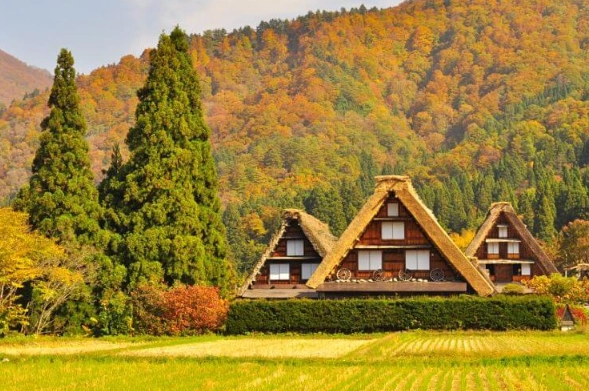
That's when I started digging. And let me tell you, finding truly unique places to see in Japan is a project. It's not about just being "different"; it's about places with soul, with a story, with an atmosphere you can't replicate. Places where you put your phone down and just soak it in.
So, I put together this list. It's not a ranking. It's a collection of ten spots that, for me, redefined what travel in Japan could be. We're talking about an island taken over by contemporary art, a village where foxes roam free, and a forest so deep it feels like another world. I'll give you the practical stuff—how to get there, when to go—but also the feel of the place, the little details you won't find in a brochure, and yes, even a few warnings if a place isn't for everyone.
Why You Should Bother Looking for Unique Japan Spots
You might wonder, why go through the hassle? The temples in Kyoto are stunning.
True. But there's a different kind of magic in having a moment to yourself at a centuries-old shrine with no one else around. It's about connection, not just checking a box. Visiting these unique places in Japan often means supporting smaller communities, seeing preservation efforts firsthand, and getting stories you can't buy. The crowds in major cities can be overwhelming, and honestly, it can start to feel transactional. These places remind you why you wanted to visit Japan in the first place.
And no, it's not about being a hipster traveler. It's about depth.
Getting Off the Beaten Path: A Quick Reality Check
Before we dive in, a dose of realism. Seeking out unique places to see in Japan often means dealing with less English signage, fewer convenient combini (convenience stores) right outside the station, and schedules that aren't always tourist-friendly. You'll need a good data SIM or pocket WiFi (I always rent one from Narita Airport's official site), patience, and a willingness to point and gesture. Download Google Translate's offline Japanese pack. Trust me.
Also, your Japan Rail Pass might not cover all the local private railways or buses needed to reach some of these gems. Always check routes on Hyperdia or Japan Travel by Navitime app before assuming.
The List: 10 Unique Places That Stuck With Me
Here they are, in no particular order. I've grouped them loosely by "vibe" to help you match them to your travel style.
The Art Island: Naoshima
Seto Inland SeaNaoshima is the poster child for unique places in Japan, and for good reason. It's where billionaire Soichiro Fukutake and architect Tadao Ando decided to fuse contemporary art, architecture, and nature on a sleepy island. The result is mind-blowing.
You're not just looking at art in a white cube gallery. You're walking into a James Turrell installation that plays with light and perception. You're sleeping in a museum (the Benesse House). You're finding a yellow pumpkin by Yayoi Kusama at the end of a pier, staring out at the sea. The Chichu Art Museum, built mostly underground, is a masterpiece in itself—it uses natural light to illuminate Monet's Water Lilies in a way I've never seen before.
How to get there: Shinkansen to Okayama, then local train to Uno Port, then a 20-minute ferry. The ferry schedule is key—miss the last one and you're stuck.
Best for: Art lovers, architecture buffs, photographers.
One more thing: Explore the neighboring islands like Teshima and Inujima for an even more expansive art experience.
The Mountain Monastery: Koyasan (Mount Koya)
Wakayama PrefectureKoyasan is the spiritual heart of Shingon Buddhism, founded over 1200 years ago. Spending a night in a temple lodging (shukubo) here is a top-tier unique Japan experience. You sleep in a tatami room, eat exquisite vegetarian monk cuisine (shojin ryori), and can join the morning prayers at dawn.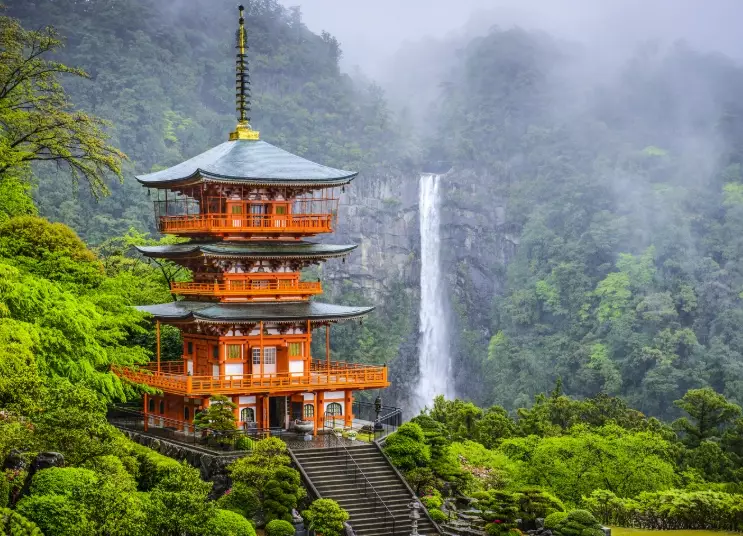
The Okunoin cemetery is the main event. It's a massive, moss-covered forest path lined with hundreds of thousands of tombs and memorials, leading to the mausoleum of Kobo Daishi, the founder. Walking through the misty, ancient cedar trees at night with just lantern light is profoundly atmospheric. It's quiet, it's respectful, and it feels centuries removed from modern life.
How to get there: From Osaka Namba, take the Nankai Railway to Gokurakubashi, then a cable car up the mountain, then a bus into the town. The Nankai line offers a useful Koyasan World Heritage Ticket.
Best for: Spiritual seekers, history enthusiasts, anyone wanting a deeply peaceful retreat.
A heads-up: The temple lodgings are basic (but clean), and the 5:30 AM prayers are early but worth it.
The Fox Village: Zao Fox Village (Zao Kitsune Mura)
Miyagi PrefectureThis one is controversial, and I need to be upfront about that. Zao Fox Village is exactly what it sounds like: a hillside enclosure where over a hundred foxes of six different species roam relatively freely. You can walk among them, feed them (from designated areas), and take photos.
It is, without a doubt, one of the most surreal and unique places to see in Japan. The sight of dozens of foxes napping, playing, or curiously watching you is something you won't forget. However, animal welfare concerns have been raised by visitors. The enclosures are spacious but not pristine, and it's a commercial operation. It doesn't feel like a conservation center.
How to get there: It's a hassle. Shinkansen to Shiroishi-Zao station, then a taxi (about 20 minutes). There's no convenient public bus. The taxi drivers know it well.
Best for: The intensely curious, photographers, fox enthusiasts who have researched the conditions.
Seriously: Read recent visitor reviews and make an informed choice.
The Thatched-Roof Village: Shirakawa-go & Gokayama
Gifu/Toyama PrefecturesA UNESCO World Heritage site that feels like a living postcard. These remote villages are famous for their gassho-zukuri farmhouses, with steep thatched roofs designed to withstand heavy snow. They look like praying hands.
Shirakawa-go (Ogimachi village) is the famous one—and yes, it gets crowded with day-trippers. But stay overnight. When the buses leave, the village transforms. You can stay in a farmhouse, eat a home-cooked meal, and see the houses illuminated at night. For a quieter experience, head to the Ainokura or Suganuma villages in Gokayama. They're smaller, more intimate, and the sense of stepping back in time is stronger.
How to get there: Bus from Takayama or Kanazawa. The highway bus booking fills up fast. In winter, roads can close due to snow.
Best for: Culture, photography, traditional architecture, a serene overnight stay.
Best time to go: Winter for the iconic snowscape, or late autumn for stunning foliage.
The Remote Art Archipelago: The Oki Islands
Shimane PrefectureIf Naoshima feels curated, the Oki Islands feel raw and discovered. This UNESCO Global Geopark is a remote archipelago in the Sea of Japan. The landscape is dramatic—sea cliffs, pristine beaches, and oddly shaped rocks formed by ancient volcanoes.
The uniqueness here is the blend of powerful nature, deep history (it was a place of exile for emperors), and a slow, island pace of life. You can cycle around Dozen, the middle islands, kayak into sea caves, and visit shrines that feel untouched. The local seafood, especially squid and turban shell, is incredible. You'll see maybe a handful of other tourists.
How to get there: Commitment required. Ferry (2.5 hours) or flight from Yonago or Izumo. Ferry schedules are weather-dependent.
Best for: Adventurers, geology nerds, cyclists, anyone wanting complete disconnect.
My advice: Rent a car or an e-bike on the islands. Public transport is very limited.
The Spiritual Power Spot: Osorezan (Mount Osore)
Aomori PrefectureTranslated as "Mount Dread," Osorezan is considered one of Japan's three most sacred mountains and is believed to be the gateway to the afterlife. The landscape is volcanic—barren, with sulfur vents steaming from grey ground, a caldera lake of milky blue water, and a haunting, silent beauty.
The Bodai-ji temple sits in the center. It's a place for communing with the dead, and you'll see small piles of stones and toys left for deceased children (jizo statues). The atmosphere is heavy, solemn, and incredibly powerful. It's not a "fun" day out. It's a contemplative, almost eerie experience. One of the most spiritually intense unique places I've visited in Japan.
How to get there: Train to Mutsu, then a 40-minute bus ride. The bus service is infrequent, so plan your day meticulously.
Best for: Those interested in Japanese spirituality, unique landscapes, and quiet reflection.
Note: The sulfur smell is strong. The onsen at the entrance is a great way to warm up after exploring the bleak landscape.
The Time-Capsule Street: Kurashiki Bikan Historical Quarter
Okayama PrefectureWhile not remote, Kurashiki's canal area is a perfectly preserved slice of the Edo period. Unlike the more commercialized old streets in Kyoto or Takayama, Kurashiki has a refined, museum-like calm. The willow-lined canals, white-walled storehouses (kura), and stone bridges are picturesque.
Many kura have been converted into museums, like the excellent Ohara Museum of Art (with a surprising collection of El Grecos and Monets), and cute cafes. It's walkable, relaxed, and feels genuinely historic rather than staged for tourists. It's a great alternative if you want old-Japan charm without the overwhelming crowds.
How to get there: Easy. A 15-minute walk from Kurashiki Station on the Sanyo Shinkansen line.
Best for: A relaxed half-day, history, photography, combining with a trip to Okayama's garden or Naoshima.
Do this: Take a short boat ride along the canal for a different perspective.
The Submerged Village: Lake Kuttara
HokkaidoHokkaido is full of nature, but Lake Kuttara near Noboribetsu is special. It's a perfect, almost circular caldera lake so pristine it's one of the clearest in Japan. But the real unique story? There's an Ainu legend that a village once existed where the lake now is, and that it was submerged as divine punishment.
You can hike the 90-minute trail around the rim through deep forest. The water is a stunning cobalt blue. It's quiet, mysterious, and feels ancient. There's a viewing platform, but the full loop hike is where you feel the isolation and the power of the legend. It's a hidden gem even for many Japanese.
How to get there: Train to Noboribetsu, then a taxi (about 15 minutes). Public bus options exist but are very limited.
Best for: Hikers, nature lovers, folklore enthusiasts.
Combine with: The hell-valley hot spring town of Noboribetsu Onsen for a classic Hokkaido onsen experience.
The Island of Cats & Secret Christians: Enoshima
Kanagawa PrefectureEnoshima is a small island connected to the mainland by a bridge, famous for its shrine, sea views, and... cats. But dig deeper. This area, along with parts of Nagasaki, was a kakure kirishitan (hidden Christian) site during the era of prohibition.
While the Samuel Cocking Garden and the lighthouse are nice, the unique layer is exploring the caves at the southern tip. The Iwaya Caves were used for worship by hidden Christians. Walking through the damp, torch-lit tunnels with Buddhist and Shinto carvings that secretly doubled as Christian symbols is a fascinating historical detective story. Then you emerge to a view of Mount Fuji across the bay.
How to get there: An easy day trip from Tokyo. Train to Katase-Enoshima Station on the Odakyu Line.
Best for: A mix of history, coastal scenery, and a break from Tokyo.
Look for: The subtle Maria Kannon statues—figures of the Virgin Mary disguised as the Buddhist deity Kannon.
The Forgotten Castle Town: Hagi
Yamaguchi PrefectureIf you love samurai history but hate crowds, go to Hagi. This remote castle town on the Sea of Japan was the seat of the powerful Mori clan and a hotbed of the Meiji Restoration. When the capital moved, Hagi was left behind, frozen in time.
You can wander the grid of streets in the samurai district (Jokamachi), where black-and-white walls and footed warehouses line quiet lanes. You can see kilns for the famous Hagi-yaki pottery and cycle to the ruins of Hagi Castle by the sea. The pace is slow, the history is palpable, and you'll have whole streets to yourself. It feels like a living museum without the entrance fee.
How to get there: It's a journey. Shinkansen to Shin-Yamaguchi, then a limited express train (about 90 minutes) to Hagi.
Best for: History buffs, photographers, pottery lovers, anyone seeking absolute tranquility.
Spend: At least two nights to soak in the atmosphere and visit the nearby Motonosumi Inari Shrine with its 123 red torii gates along the coast.
Planning Your Trip to These Unique Japanese Destinations
Okay, so maybe one (or five) of these spots caught your eye. How do you actually make it happen? Let's talk logistics.
First, transportation. This is your biggest hurdle and budget item. The table below breaks down the general access difficulty and key transit tips for each place.
| Destination | Region | Access Difficulty | Key Transit Tip |
|---|---|---|---|
| Naoshima | Seto Inland Sea | Medium | Check ferry times first. JR Pass covers train to Uno, not ferry. |
| Koyasan | Kansai | Medium | Use the Nankai Koyasan World Heritage Ticket for value. |
| Zao Fox Village | Tohoku | High | Taxi essential. Coordinate with return pickup time. |
| Shirakawa-go | Chubu | Medium | Book buses *early*, especially for winter/autumn. |
| Oki Islands | Chugoku | High | Check ferry weather cancellations. Allow buffer days. |
| Osorezan | Tohoku | High | Infrequent bus. Plan arrival/departure to the minute. |
| Kurashiki | Chugoku | Low | Easy walk from Shinkansen station. |
| Lake Kuttara | Hokkaido | Medium-High | Taxi from Noboribetsu. Ask driver to wait or call for pickup. |
| Enoshima | Kanto | Low | Simple train from Tokyo. Use Odakyu Enoshima Pass. |
| Hagi | Chugoku | High | Long train from Shin-Yamaguchi. Rent a bicycle in town. |
Second, accommodation. In remote areas, options are limited. For places like Shirakawa-go, Oki, or Hagi, book your stay *first*, then build your travel around it. Websites like Japanican often have listings for traditional stays that international booking sites might miss.
Third, money. Rural Japan runs on cash. ATMs at 7-Eleven (Seven Bank) are your most reliable friends. Don't assume small inns or local restaurants take credit cards.
Cultural Etiquette for Off-the-Beaten-Path Japan
When you visit these unique places in Japan, you're often a guest in a community, not just a tourist attraction. A little cultural awareness goes a long way.
- Onsen/Sento Rules: Wash thoroughly before entering the bath. No towels in the water. Small towel on head or side. Tattoos can be problematic; use cover-up patches or book a private bath.
- Temple & Shrine Manners: Be quiet. Follow the purification ritual (rinse hands/mouth at the chozuya). Photography is often prohibited inside main halls. A small offering (5-100 yen) is customary when praying.
- In Someone's Home/Business: Take your shoes off when the floor changes (tatami, raised wood). Pointing is rude. Avoid blowing your nose loudly in public.
- The Art of "Sumimasen": This word means "excuse me," "sorry," and "thank you" depending on context. Use it liberally. It shows respect.
Frequently Asked Questions (FAQs)
I get a lot of the same questions from friends planning trips. Here are the big ones.
Final Thoughts: The Reward of the Road Less Traveled
Looking for unique places to see in Japan isn't the easiest way to travel. It requires more research, more flexibility, and sometimes a tolerance for uncertainty. You might get on the wrong local bus. You might have a meal where you have no idea what you're eating (but it's delicious).
But the payoff is immense. It's the feeling of discovery. It's the conversation with a pottery master in Hagi who shows you his kiln. It's the silence of Okunoin cemetery at dusk. It's the taste of just-caught seafood on a remote island. These are the moments that define a trip, long after the memory of a crowded observation deck fades.
Japan has an endless capacity to surprise you if you're willing to look beyond the first page of the guidebook. These ten spots are just the beginning. The real joy is in finding your own hidden lane, your own quiet temple, your own personal list of unique places to see in Japan.
Happy exploring. And don't forget to pack your sense of adventure—and good walking shoes.

Comments