Quick Guide
- Distance vs. Travel Time: Why the Map Doesn't Tell the Whole Story
- Cost Comparison: Which Trip is Easier on Your Wallet?
- The Travel Experience: Scenery and Vibe
- Practical Itinerary Planning: Where Should You Stay?
- Common Questions & Things You Might Not Have Considered
- The Final Verdict: So, What's the Best Way to Get to Kanazawa?
Okay, let's cut to the chase. You're planning a trip to Japan, you've got Tokyo's neon buzz and Kyoto's serene temples on your list, and now you're hearing amazing things about Kanazawa. This city on the Sea of Japan is supposed to have this incredible preserved samurai district, a stunning garden, and fantastic seafood. But then the practical question hits you: Is Kanazawa closer to Tokyo or Kyoto? Where should you base yourself to get there without wasting a whole precious day on a train?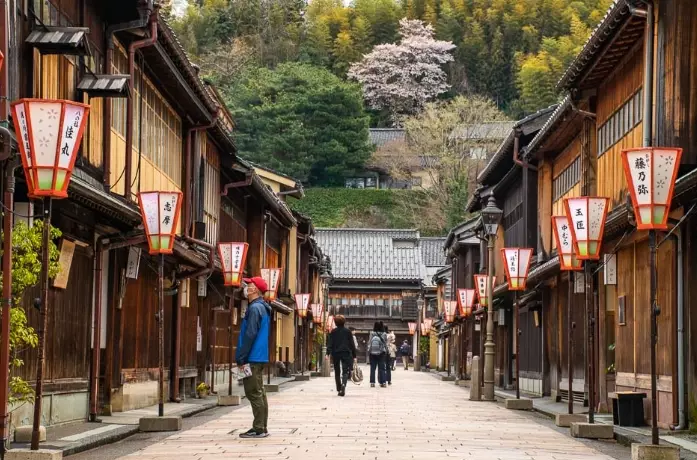
I remember when I was first planning my own trip, staring at a map of Japan. Kyoto looked closer on the map, but everyone online seemed to be talking about taking the shinkansen (bullet train) from Tokyo. It was confusing. The short, simple answer is yes, Kanazawa is geographically closer to Kyoto. But if you're like me, you don't just want a simple answer. You want to know what that actually means for your trip. How much closer? Is the travel experience different? Which route is cheaper, or more scenic, or easier with luggage?
But honestly, stopping there would be a disservice to you. That's just the surface. The real decision depends on a whole bunch of other stuff—your Japan Rail Pass situation, your budget, your tolerance for changing trains, and even what kind of scenery you want to see from the window. So let's break it all down, layer by layer.
Distance vs. Travel Time: Why the Map Doesn't Tell the Whole Story
This is the first big trap. You look at a map and think, "Ah, Kyoto is halfway up the country and Tokyo is way down east, so of course Kyoto is closer." And you're right, in terms of pure geography. But Japan's railway network, while amazing, doesn't always run in straight lines between mountains and along coastlines.
The real game-changer is the Hokuriku Shinkansen. This bullet train line, which opened in stages, connects Tokyo to Kanazawa... but not directly in the fastest way possible from Tokyo Station. To get the fastest time from Tokyo, you take the Nagano-bound shinkansen to Nagano and then switch to a different train for the final leg to Kanazawa. It's seamless, but it's a transfer.
From Kyoto, you don't take a shinkansen for the whole journey. Instead, you take a special limited express train called the Thunderbird. It's not a bullet train, but it's a very fast, comfortable express that goes directly from Kyoto Station to Kanazawa Station. No changes. That's a huge point in its favor if you hate juggling suitcases on platforms.
So when you're asking is Kanazawa closer to Tokyo or Kyoto, you need to be asking about effective travel time, not just distance.
Breaking Down the Travel Times
Here’s where a table helps to see everything side-by-side. These are the typical, scheduled times for the most common and efficient routes.
>Budget option. Saves on a night's accommodation but is tiring.>Shorter than from Tokyo, but train is often a better value for time.
| Route | Main Service / Train | Typical Travel Time | Transfers | Notes |
|---|---|---|---|---|
| Tokyo → Kanazawa | Hokuriku Shinkansen (via Nagano) | ~2 hours 30 minutes to 3 hours | 1 (At Nagano or Toyama) | Fastest option. The Kagayaki service is fastest but requires a reserved seat. |
| Kyoto → Kanazawa | Thunderbird Limited Express | ~2 hours 15 minutes to 2 hours 30 minutes | 0 (Direct) | Most convenient. Runs frequently throughout the day. |
| Tokyo → Kanazawa (Bus) | Overnight Highway Bus | ~7 to 8 hours | 0 | |
| Kyoto → Kanazawa (Bus) | Daytime / Overnight Bus | ~4 to 5 hours | 0 |
See that? The train from Kyoto is not only slightly faster on paper, but it's also direct. That 15-30 minute difference can feel like a lot more when you don't have to switch trains. So in the battle of Kanazawa closer to Tokyo or Kyoto, Kyoto wins on both distance and simplicity of travel.
Cost Comparison: Which Trip is Easier on Your Wallet?
Time is one thing, but your budget is another. Japan travel can be expensive, and train tickets are a big part of that. Here’s the financial breakdown, which might surprise you.
If you're paying for individual tickets (and not using a rail pass):
- Tokyo to Kanazawa (Shinkansen, reserved seat): Around 14,000 to 15,000 yen one-way for the fastest service (Kagayaki).
- Kyoto to Kanazawa (Thunderbird, reserved seat): Around 7,000 to 8,000 yen one-way.
Wow, right? The cost from Kyoto is basically half. That's a massive difference. The reason is the Thunderbird is a limited express, not a full shinkansen, so the base fare and express surcharge are lower. This is a critical point for budget travelers.
The Japan Rail Pass Factor
This changes the math completely. Both the Tokyo-Kanazawa shinkansen route and the Kyoto-Kanazawa Thunderbird route are fully covered by the nationwide Japan Rail Pass. If you have a pass, the out-of-pocket cost for either trip is zero. Your decision then shifts entirely to time, convenience, and how you've structured your itinerary.
However, there's a strategic twist. The Hokuriku Arch Pass is a cheaper regional pass that covers travel between Tokyo and Kanazawa/Kyoto area via the Hokuriku region. If your trip is focused on that corridor, it can be better value than the full nationwide pass. You need to plot your entire journey to see which pass, if any, makes sense. The official Japan Rail Pass website and the JR West page for the Hokuriku Arch Pass are the only places you should check for official, up-to-date prices and rules.
For the bus, costs are much lower—maybe 4,000-6,000 yen from Tokyo and 3,000-4,500 yen from Kyoto—but you're trading many, many hours of your trip. For me, unless I was on an extremely tight budget, the time loss isn't worth the savings on such a key leg of a Japan trip.
The Travel Experience: Scenery and Vibe
This is the fun part that most simple answer articles skip. The journey itself is part of the adventure. So, is Kanazawa closer to Tokyo or Kyoto in terms of the feeling of the trip?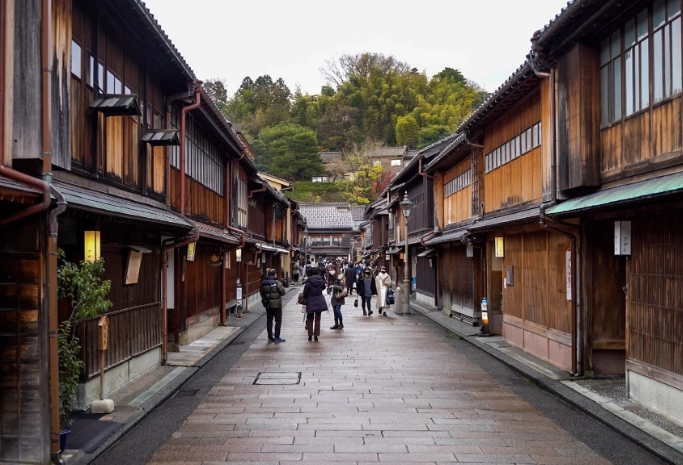
From Tokyo: The Mountain Passage
The Hokuriku Shinkansen route is an engineering marvel. After leaving the Tokyo suburbs, you plunge into the Japanese Alps. The stretch through Nagano prefecture is tunnels and dramatic mountain vistas. It feels like a journey from the modern metropolis into the heart of traditional Japan. If you get a seat on the right side (facing forward) heading towards Kanazawa, you might get glimpses of the famous "Snow Corridor" near Toyama in late spring. It's a powerful, scenic ride that makes you feel the distance you're covering.
From Kyoto: The Coastal Approach
The Thunderbird from Kyoto takes a different path. It runs along the coast of the Sea of Japan for a significant portion. The vibe is more… maritime. You'll see fishing villages, ports, and a calmer, grayer sea compared to the Pacific side. It feels less dramatic than the alpine route but more connected to the local life of the region Kanazawa is part of. Since it's a direct train, it also has a more relaxed, commuter-style atmosphere. You'll see more locals using it for regular travel.
Personally, I preferred the scenery from Tokyo. The mountains were breathtaking. But the convenience from Kyoto was unbeatable. It's a trade-off.
Practical Itinerary Planning: Where Should You Stay?
This is the ultimate question, right? The answer to "Is Kanazawa closer to Tokyo or Kyoto?" is useless unless it helps you decide where to book your hotels.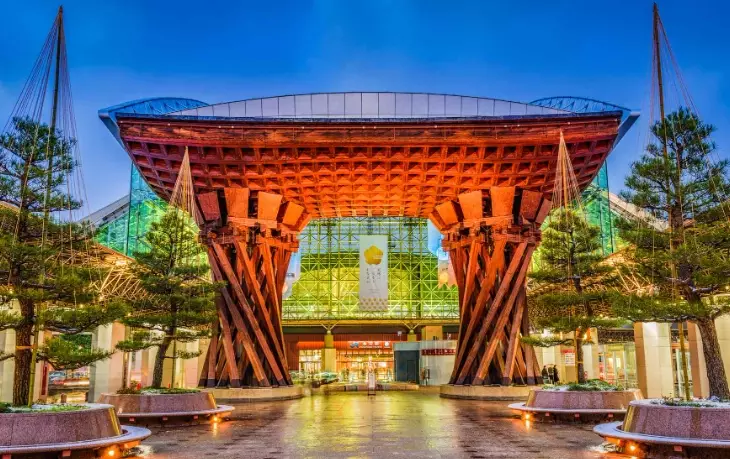
Scenario 1: The Classic "Golden Route" First-Timer
If this is your first trip to Japan and you're doing Tokyo, Hakone/Mt. Fuji, Kyoto, Osaka, maybe Hiroshima, then adding Kanazawa is a stretch. But if you must, it makes far more logistical sense to visit Kanazawa as a side trip from Kyoto. You lose less time in transit, and the cost is lower. You could do a very long day trip from Kyoto, though I'd strongly recommend an overnight stay. Kanazawa's evening atmosphere in the geisha districts is special.
Scenario 2: The Deep Dive into Central Japan
If you're focusing on the Alps and the Sea of Japan coast, you might fly into Tokyo, immediately head to Nagano or Matsumoto, then work your way to Kanazawa via the Alpine Route (Tateyama-Kurobe), and then go from Kanazawa down to Kyoto. In this case, you're not choosing a base; you're moving through. Here, understanding that Kanazawa is a natural midpoint between the Japanese Alps and the Kansai region (Kyoto/Osaka) is key.
Common Questions & Things You Might Not Have Considered
The Final Verdict: So, What's the Best Way to Get to Kanazawa?
Let's wrap this up with a clear, actionable summary.
Geographically and in almost every practical travel sense, Kanazawa is closer to Kyoto than to Tokyo. The train from Kyoto is cheaper, usually just as fast or faster, and direct. For most itineraries, visiting Kanazawa from a Kansai base (Kyoto or Osaka) is the most efficient plan.
However, your specific situation can override this general rule.
- Choose the Kyoto route if: Your trip is focused on Kansai (Kyoto, Osaka, Nara), you're on a tighter budget for individual tickets, you value a direct train ride, or you want a simpler, shorter journey.
- Consider the Tokyo route if: You have a Japan Rail Pass making cost irrelevant, your itinerary starts in Tokyo and you're moving north to the Alps anyway, or you specifically want to experience the alpine shinkansen scenery. Also, if you find a great flight deal into Tokyo and out of Osaka (or vice versa), it can make a Tokyo->Alps->Kanazawa->Kyoto one-way journey perfect.
Ultimately, don't get hung up on just the distance. Look at your entire Japan trip map. Kanazawa is a jewel worth the trip, whether you approach it from the Pacific side or the Sea of Japan side. The answer to "is Kanazawa closer to Tokyo or Kyoto?" is your starting point, not your finishing line. Use it to build the smarter, smoother, and more memorable Japanese adventure you're looking for.
Happy travels!



Comments