So, you're asking, "Can you travel to Japan without a visa now?" For a lot of us, the short answer is yes. If you hold a passport from the United States, Canada, the United Kingdom, Australia, or most European nations, you can likely enter Japan for tourism without a visa for a short stay. But that "yes" comes with more asterisks and fine print than it did a few years ago. The rules haven't changed fundamentally, but the process and expectations have tightened up. I've seen too many travelers get tripped up by the new digital requirements, assuming their passport alone is enough. It's not just about your nationality anymore; it's about proving you're a genuine tourist before you even board the plane.
Your Quick Guide to Japan Visa-Free Travel
- How does the Japan visa waiver system actually work?
- Who can travel to Japan without a visa?
- What are the new requirements for visa-free travel to Japan?
- Common mistakes visa-free travelers make (and how to avoid them)
- Your 5-day visa-free Japan itinerary: A practical scenario
- Your visa-free Japan travel questions, answered
How does the Japan visa waiver system actually work?
Japan's visa exemption system is based on bilateral agreements. It's not a blanket "all tourists welcome" policy. The government has a list of countries whose citizens they've agreed can enter for short-term stays (usually tourism, business meetings, or visiting family) without obtaining a visa in advance.
The key word is "short-term." For most eligible nationalities, this means a maximum of 90 days. For some, like the UK, it's 180 days. You cannot work or engage in paid activities under this status. The moment you land, an immigration officer stamps your passport with a "Temporary Visitor" status, granting you that 90-day window. This isn't a visa; it's a landing permission. The distinction matters because you can't extend it from within Japan. When your 90 days are up, you must leave.
Who can travel to Japan without a visa?
The list is long, but here are the major players. Your passport must be valid for the entire duration of your stay, and it must be an ordinary passport (diplomatic/official passport holders have different rules).
| Country/Region | Stay Limit (for Tourism) | Important Passport Note |
|---|---|---|
| United States | 90 days | Must have at least one blank page for the entry stamp. |
| Canada | 90 days | Same as above. |
| United Kingdom | 180 days | One of the longest waiver periods. |
| European Union (Schengen) | 90 days within any 180-day period | This is a rolling period, not a calendar year. Calculate carefully. |
| Australia | 90 days | |
| New Zealand | 90 days | |
| South Korea | 90 days | Biometric passport required. |
| Singapore | 90 days | |
| Taiwan | 90 days | >Must have a passport with personal ID number.|
| Hong Kong (SAR Passport) | 90 days |
This isn't the full list. For the definitive, official list, always check the Japanese Ministry of Foreign Affairs website. They update it if any agreements change.
What about other countries? If your country isn't on the list, you'll need to apply for a tourist visa at your nearest Japanese embassy or consulate. The process involves paperwork, financial proof, and an itinerary.
What are the new requirements for visa-free travel to Japan?
Here's where most of the confusion lies. Being visa-exempt doesn't mean you just show up. Japan has implemented digital procedures that are now de facto mandatory for a smooth entry.
The JNTO Registration (Visit Japan Web)
This is the big one. The Japan National Tourism Organization (JNTO) runs a service called Visit Japan Web. You need to register on this website or its app before your flight. It's not technically a visa application; it's a pre-registration of your immigration and customs information.
You upload your passport details, flight information, and accommodation details. The system then generates two QR codes: one for immigration (a disembarkation card) and one for customs (a declaration form). At the airport, you scan these codes at kiosks, which speeds up the process immensely. I've flown into Narita and Haneda, and the lines for people with QR codes were moving three times faster than the traditional paper line.
Can you skip it and use paper forms on the plane? Technically, yes. But why would you? It takes 15 minutes online and saves you at least 30-45 minutes of standing in line after a long flight. It also reduces errors from handwriting.
Proof of Onward Travel
Immigration officers have the right to ask for proof you intend to leave Japan before your 90 days are up. This means a confirmed flight ticket out of Japan. A one-way ticket into Japan is a red flag. I've seen airline staff at check-in in Los Angeles refuse boarding to someone with no onward ticket, citing carrier liability rules. Don't risk it. Have your return or onward flight confirmation ready (a digital copy on your phone is fine).
Sufficient Funds
While rarely asked, you should be prepared to show you have enough money to support your stay. There's no fixed amount, but a rule of thumb is having access to at least 10,000 yen per day, or a credit card with a high limit. Carrying some cash is still wise in Japan.
Common mistakes visa-free travelers make (and how to avoid them)
After helping dozens of friends plan trips, I see the same pitfalls.
Mistake 1: Assuming "visa-free" means "no questions asked." The immigration officer's job is to verify you're a bona fide tourist. They might ask where you're staying, what you plan to see, and who you're visiting. Have your first hotel address memorized or saved. Looking confused and saying "I don't know" can lead to secondary screening.
Mistake 2: Not registering on Visit Japan Web because it seems complicated. It's available in English. The interface isn't award-winning, but it works. Do it 72 hours before your flight when you're not rushed.
Mistake 3: Overstaying by even one day. This is a serious immigration violation. It can lead to fines, detention, and being banned from re-entering Japan for years. Set multiple calendar reminders for your departure date.
Mistake 4: Thinking you can do a "visa run." The idea of popping over to South Korea for a weekend and coming back for a fresh 90 days is outdated and frowned upon. Immigration officers track entries and exits. If they suspect you're trying to live in Japan as a tourist, they can deny you entry on your return. The waiver is for tourism, not long-term residence.
Your 5-day visa-free Japan itinerary: A practical scenario
Let's make this concrete. Say you're from the US and have a week off. You want to see Tokyo and a taste of traditional Japan. Here's a tight but doable plan.
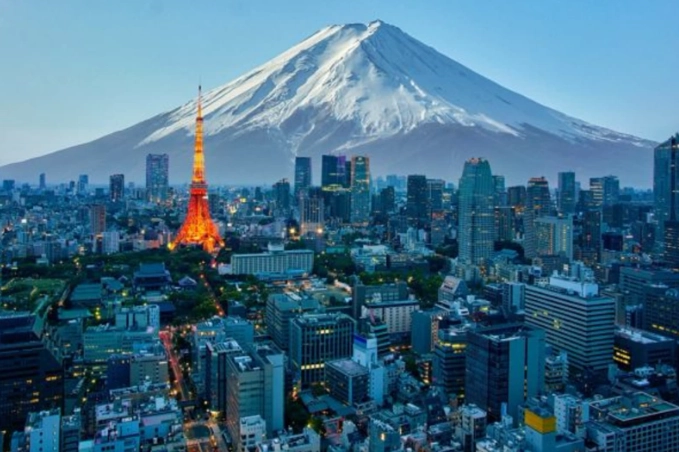
Day 1-3: Tokyo. Land at Haneda (HND). It's closer to the city than Narita. Use your Visit Japan Web QR code at immigration. Take the monorail or a limousine bus to your hotel. I'm partial to staying in Shinjuku or Shimbashi for transit links. Forget renting a car; the train system is your best friend. Get a Suica or Pasmo card immediately. Day one: recover from jetlag with a stroll in Shinjuku Gyoen garden and an evening in the neon lights of Kabukicho. Day two: Senso-ji Temple in Asakusa in the morning, teamLab Planets digital art museum in the afternoon. Day three: A day trip to Kamakura to see the Great Buddha (Daibutsu) – it's an hour by train.
Day 4-5: Kyoto. Take the Shinkansen (bullet train) from Tokyo Station. Book your ticket in advance online or at any major station. It's about 2.5 hours. Stay in the Gion or Higashiyama area. You only have a day and a half, so be strategic. Day four afternoon: Kiyomizu-dera Temple and the preserved streets of Sannenzaka. Day five morning: Fushimi Inari Shrine (go early, like 7 am, to avoid the crowds on the torii gate path). Afternoon: Return to Tokyo for your flight out.
Where to Stay (Mid-Range Picks):
- Tokyo (Shinjuku): APA Hotel Shinjuku-Kabukicho Tower. Central, clean, has a public bath. Rooms are famously small, but you're there to sleep. About $90-120/night.
- Tokyo (Shimbashi): Mitsui Garden Hotel Shimbashi. Great for rail connections, newer, slightly more spacious. About $110-140/night.
- Kyoto (Gion): Gion Hotel Miyagawacho. Traditional ryokan-style feel with modern amenities. Right in the historic district. About $130-180/night.
Budget? For this 5-day sprint, excluding flights, aim for $1000-$1500 per person for accommodation, transport (including the Shinkansen, which is ~$220 round trip), food, and attractions. You can do it cheaper with capsule hotels and convenience store meals, or spend more easily.
Your visa-free Japan travel questions, answered
So, can you travel to Japan without a visa now? For most readers here, the answer remains a qualified yes. The qualification is that you need to do more homework than before. Register digitally, have your documents in order, and respect the purpose and duration of the waiver. Japan is an incredible destination that welcomes tourists, but it expects them to follow the rules precisely. Do that, and you're in for an unforgettable trip.



Comments