So, how much should a trip to Japan cost? The short answer is: it completely depends on you. I've seen people spend $5,000 in a week and others manage two weeks on $2,000. The magic isn't in a single number, but in understanding where your money goes. After a dozen trips there, I can tell you that a smart Japan travel budget isn't about deprivation—it's about making informed choices that match your style. Let's cut through the vague estimates and break down the real costs, category by category.
Your Japan Budget at a Glance
Where Does Your Money Go? The Big Five Categories
Forget a lump sum. Your Japan trip cost is the sum of five main parts. I'll use US Dollars for reference, but the proportions are what matter.
1. Flights (The Wild Card)
This is your biggest variable. From the US West Coast, I've snagged round-trip tickets to Tokyo for $650 in the off-season (Jan-Feb, late Sep-Oct). From the East Coast or Europe, expect $900-$1,300. Summer, cherry blossom season (late March-early April), and Golden Week (early May) can easily double those prices. My rule? Set a flight alert and be flexible with dates. A difference of two days can save you $300.
2. Accommodation (Your Base Cost)
Japan has every type of lodging, but space is a premium. Here’s the real deal per night:
- Budget Hostel/Capsule: $25 - $50. A clean capsule hotel in Osaka or a bunk in a Tokyo hostel. You get a bed, shared facilities, and often great social vibes. Book early for the best ones.
- Mid-range Business Hotel: $80 - $150. Think APA Hotel, Dormy Inn, or Tokyu Stay. The room will be compact (think "cozy") but impeccably clean, with a private bathroom and often a free onsen or breakfast. This is my go-to for efficiency.
- Luxury Hotel/Ryokan: $250 - $600+. A high-end hotel in Shinjuku or a traditional ryokan in Hakone with kaiseki dinner and breakfast included. The ryokan experience is worth it for at least one night.
A common mistake? Underestimating location cost. A hotel right next to Shinjuku Station costs more than one a 10-minute walk away. That walk saves money and lets you see more of the city.
3. Transportation (More Than Just Bullet Trains)
This intimidates people, but it's predictable.
- Intercity Trains: A one-way Shinkansen ticket from Tokyo to Kyoto is around $130. The famous Japan Rail Pass is a big upfront cost (roughly $350 for 7 days) and only makes sense if you're doing a lot of long-distance travel in a short time. I once wasted money on one because I didn't map out my trips first.
- Local Transit: In cities, budget $5-$10 per day for subways and buses. Get a rechargeable IC card (Suica or Pasmo) immediately—it's faster than buying tickets.
- Regional Passes: Often overlooked. A Hakone Free Pass or a Kansai Area Pass can be brilliant value for focused exploration.
4. Food & Drink (A Budget You Can Control)
You can eat incredibly well at any price.
- Budget: $20-$30/day. Conveyor belt sushi ($1-$3 per plate), ramen bowls ($8-$12), convenience store meals (surprisingly good and around $5), and supermarket bento boxes.
- Mid-range: $40-$70/day. Adding in a nice tonkatsu lunch set ($15), a casual izakaya dinner with a drink ($25), and better coffee.
- Luxury: $100+/day. Michelin-starred sushi, premium wagyu teppanyaki, or multi-course kaiseki. Reservations are often essential.
Don't sleep on breakfast. A pastry from a bakery and coffee from 7-Eleven is under $5. Hotel breakfasts are usually overpriced.
5. Activities, Souvenirs & Miscellany
This is your "fun money." Temple entry fees are usually $3-$6. Major museums are $10-$15. A day at TeamLab Planets in Tokyo is about $30. Shopping? It ranges from $5 for kitkats to $500 for a knife. Set aside a daily allowance here based on your interests.
The Hidden Cost No One Talks About: Cash. Despite its tech image, Japan still runs on cash in many smaller restaurants, markets, and temples. Always carry more yen than you think you need. Finding an ATM that accepts foreign cards isn't always instant.
Daily Budget Scenarios: From Shoestring to Splurge
Let's translate those categories into daily spending, excluding flights. This is your on-the-ground cost.
| Budget Level | Accommodation | Food & Drink | Transport & Activities | Total Per Day |
|---|---|---|---|---|
| Budget Traveler (Hostels, convenience stores, buses) |
$35 | $25 | $20 | $80 |
| Mid-Range Traveler (Business hotels, mix of casual & nice meals, trains) |
$110 | $55 | $35 | $200 |
| Luxury Traveler (Boutique hotels/ryokan, fine dining, taxis) |
$300 | $120 | $80 | $500 |
These are averages. Some days you'll travel between cities (higher transport cost), other days you'll just wander a neighborhood (almost free). The mid-range budget is what most people I know actually spend. It allows for comfort, spontaneity, and that amazing unplanned meal.
Putting It All Together: Sample Itinerary Costs
The 7-Day Classic (Tokyo, Kyoto, Osaka)
Let's assume a mid-range traveler flying from Los Angeles in shoulder season.
- Flights: $750
- Accommodation (6 nights): $110 x 6 = $660
- Food & Drink (7 days): $55 x 7 = $385
- Transport: One-way Shinkansen (Tokyo-Kyoto) $130 + local transit passes & IC card $60 = $190
- Activities & Souvenirs: $25 x 7 = $175
Total Estimated Cost: $2,160. This is a realistic figure for a comfortable, fast-paced week hitting the highlights.
The 14-Day Deep Dive (Tokyo, Hakone, Kyoto, Hiroshima, Osaka)
For a budget-conscious traveler wanting more immersion.
- Flights: $850 (maybe East Coast departure)
- Accommodation (13 nights): $35 x 13 = $455
- Food & Drink (14 days): $25 x 14 = $350
- Transport: 7-Day Japan Rail Pass $350 + local top-ups $40 = $390
- Activities & Souvenirs: $15 x 14 = $210
Total Estimated Cost: $2,255. Notice how the longer trip isn't double the cost? Flights and rail passes are fixed costs that get amortized. You get way more for your money by staying longer.
How to Save Money in Japan Without Missing Out
Saving money here isn't about skipping things; it's about smarter swaps.
Transport Hacks
Don't buy a JR Pass because a blog told you to. Use the official JR Pass Calculator (just search it) to compare point-to-point ticket costs. For regional travel, overnight buses (like Willer Express) can save a night's accommodation and transport cost—they're clean and safe. In cities, rent a bicycle. Kyoto is fantastic to explore on two wheels.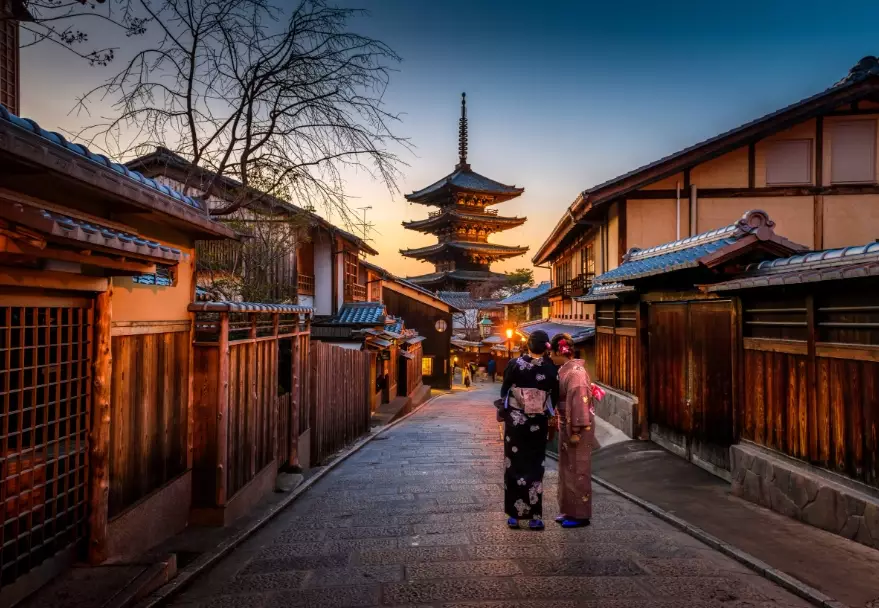
Accommodation Wisdom
Look for business hotels slightly outside the main tourist hubs. A place near a secondary subway line is often cheaper and quieter. For groups, renting an entire apartment on platforms like Airbnb can be very cost-effective. For solo travelers, capsule hotels are an experience, not just a bed.
The Food Strategy
Eat your big meal at lunch. Many high-quality restaurants offer spectacular teishoku (set lunch menus) for half the price of their dinner service. Department store basements (depachika) are food heavens for discounted gourmet meals after 7 PM. And yes, Lawson's fried chicken is a cultural institution.
Activity Savings
Many cities offer discount passes (like the Tokyo Metro 24-hour ticket). Some major attractions have cheaper admission later in the day. Often, simply walking through historic districts like Kyoto's Gion or Kamakura's backstreets is free and more rewarding than a paid tour.
Your Japan Budget Questions, Answered
Is the Japan Rail Pass ever worth it for a budget traveler?
It's a math problem, not a must-have. If your itinerary is just Tokyo and Kyoto with a day trip to Nara, buying individual tickets is cheaper. The pass becomes valuable on whirlwind trips covering long distances like Tokyo -> Hiroshima -> Kyoto -> Tokyo within 7 days. Use the calculator. The new price increase in 2023 made it even less of a no-brainer.
How much cash should I carry per day?
I start my day with 5,000 to 10,000 yen (about $35-$70). Major expenses like hotels and department stores take card, but street food, small restaurants, temple donations, and bus fares often don't. 7-Eleven ATMs (Seven Bank) are the most reliable for international withdrawals.
What's a common budgeting mistake first-timers make?
Over-planning expensive sit-down meals for every lunch and dinner. You'll see a fantastic-looking ramen shop or takoyaki stand and want to try it, but you can't because you have a reservation elsewhere. Leave room in your budget and schedule for spontaneity. Some of my best meals were unplanned discoveries.
Is Japan expensive for solo travelers?
It can be, due to single occupancy supplements in hotels. But Japan is also one of the easiest and safest places for solo travel. Capsule hotels, hostel private rooms, and business hotels cater to solo guests. Dining alone is completely normal, with many restaurants having counter seating.
Should I budget for tipping?
No. Tipping is not part of the culture and can cause confusion. Excellent service is the standard and is included in the price. At a high-end ryokan, a small gift from your home country might be appreciated, but cash tips are generally refused.
So, how much should a trip to Japan cost? You're now equipped to build your own number. Start with your flight, decide on your daily comfort level ($80, $200, or $500), multiply by your nights, and add a buffer for those incredible souvenirs you didn't know you wanted. The goal isn't to spend the least amount of money, but to spend your money on the things that will make your trip uniquely yours—whether that's a $300 Kobe beef dinner or a $3 can of hot coffee from a vending machine while watching the scramble crossing. Plan smart, then go enjoy it.

Comments