Your Quick Navigation
Let's be honest, figuring out visa rules can feel like trying to read a map in a language you don't speak. I remember the first time I looked into the Japan tourist visa requirements for a friend – it was a mess of conflicting forum posts and outdated embassy PDFs. It shouldn't be that hard.
So, I decided to put everything I learned from that process (and from helping others since) into one clear, straightforward guide. This isn't about legal jargon; it's about what you actually need to do to get that stamp in your passport and start planning your trip to Tokyo, Kyoto, or wherever your Japan adventure takes you.
The core Japan tourist visa requirements aren't a mystery, but the devil is in the details. A missing signature, a bank statement that's a day too old, or a photo that doesn't meet the exact specs can send your application back to square one. We're going to avoid all that.
Who is this for? This guide is primarily for passport holders from countries that require a visa to enter Japan for tourism. This includes many nations in South Asia, Southeast Asia, the Middle East, Africa, and parts of Eastern Europe. If you're from a visa-exempt country (like the US, UK, Canada, Australia, most of the EU, etc.), you can skip the visa and just hop on the plane with your passport. Lucky you!
What Exactly is a Japan Tourist Visa?
Before we dive into the paperwork, let's get our terms straight. A Japan tourist visa, officially known as a "Temporary Visitor" visa, is a sticker or stamp placed in your passport that gives you permission to enter Japan for leisure, sightseeing, visiting friends or relatives (without paid activity), or participating in amateur sports or cultural events.
The standard single-entry visa typically allows a stay of up to 90 days. There are also double-entry and multiple-entry visas, but those are harder to get on your first application and usually require you to show stronger ties to your home country or a specific need for multiple entries.
Here's the thing a lot of people get wrong: the visa is your permission to enter. When you land in Japan, the immigration officer will give you a status of residence (like a landing permission), which is what actually dictates how long you can stay. The duration on your visa and the duration granted at immigration should match, but always check the stamp you get at the airport.
The Complete Checklist: Documents You Must Prepare
This is the heart of the Japan tourist visa requirements. Embassies and consulates are notoriously picky. Think of them as the strictest teacher you ever had – they want everything exactly as asked for, no substitutions.
I've seen applications fail over the smallest things. Don't let that be you. Use this list as your bible.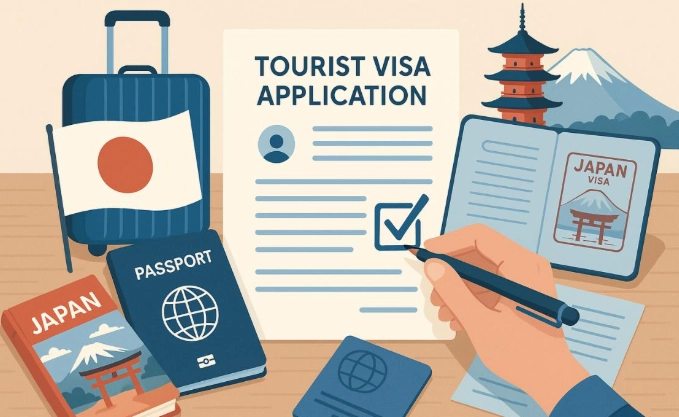
Core Principle: Every document you submit is meant to prove two things: 1) You have a legitimate, temporary reason for visiting Japan, and 2) You have the financial means and strong reasons to return home after your trip. The entire application process is designed to assess these two points.
The Non-Negotiable Foundation
These items are required for every single applicant, no exceptions.
- Visa Application Form: Download the latest version directly from the website of the Japanese embassy or consulate that has jurisdiction over your place of residence. This is crucial – using an old form is an instant rejection. Fill it out on a computer, print it, and sign it with a black pen. No white-out, no scribbles. Neatness counts. A tip? Save the PDF first, then fill it. That way you can correct mistakes.
- Passport: Must be valid for the entire duration of your intended stay in Japan. It must also have at least one completely blank visa page (not the amendment pages at the back). If your passport is looking rough, consider renewing it first. I once helped someone whose application was delayed because the embassy deemed the passport's condition "poor."
- Photo: One recent (within the last 6 months) passport-sized photo (45mm x 35mm). It must have a plain white background, you must be facing forward with a neutral expression (no smile, sorry!), and your full face must be visible (no hats, unless for religious purposes, and even then, it can't obscure your face). Glare on glasses is a common reason for rejection. Just take them off for the photo to be safe.
- Proof of Legal Residence: If you're applying from a country where you are not a citizen (e.g., an Indian citizen applying from the USA), you must provide a copy of your valid visa or residence permit for that country.
Proving Your Travel Plans
Japan wants to know you're a genuine tourist with a plan. Vague ideas won't cut it.
- Detailed Day-by-Day Itinerary: This is more important than many realize. Use a table format. List the date, city/place of stay, and detailed activities for each day of your trip. "Day 3: Tokyo" is bad. "Day 3: Tokyo. Morning: Visit Senso-ji Temple in Asakusa. Afternoon: Explore Akihabara district. Evening: Dinner in Shinjuku and observation from Tokyo Metropolitan Government Building." is good. Include flight numbers and hotel names/addresses if known.
- Round-Trip Flight Reservation: You don't necessarily need to buy the tickets upfront (which is risky). Most embassies accept a flight reservation or itinerary from a travel agency or airline showing your entry and exit from Japan. This proves you intend to leave. Some embassies are now stricter and may ask for confirmed tickets, so check your specific embassy's requirements.
- Hotel Confirmations: Reservations for your entire stay in Japan. These can be from booking sites like Booking.com or Agoda, which often allow free cancellation. They just need to show your name, the hotel details, and the dates.
Personal Anecdote: A friend of mine submitted an itinerary that had him flying from Tokyo to Osaka, but his hotel bookings showed him in Tokyo on the same day. The inconsistency was flagged immediately, and he had to resubmit. Double-check your dates and cities! Cross-reference your itinerary, flights, and hotel bookings like your trip depends on it – because it does.
Proving You Can Afford the Trip (And Will Go Home)
This is the section that causes the most anxiety. How much money is enough? The answer is frustratingly vague: "sufficient funds."
- Bank Statements: Typically, you'll need official bank statements for the last 3 to 6 months. They must show your name, account number, and a healthy, consistent balance. A sudden large deposit right before applying looks suspicious – it implies you borrowed the money just for the visa. The balance should logically support your travel plans. A two-week trip might need a statement showing $2,000-$3,000 or more, depending on your itinerary.
- Income Proof: Your last 3-6 months' payslips or a letter from your employer stating your position, salary, length of employment, and that you have approved leave for your travel dates. This letter should be on company letterhead with a signature and contact details.
- Income Tax Returns: Copies of your most recent Income Tax Return (ITR) or Form 16 (in some countries) are becoming increasingly common requirements. They provide a official, government-verified snapshot of your financial standing.
What if you don't have a regular job or sufficient funds in your own account?
Sponsored by Family? If someone else (like a parent or spouse) is funding your trip, they become your sponsor. They need to provide all of their own financial documents (bank statements, employment letter, ITR) plus a signed sponsorship letter, a copy of their passport, and proof of relationship (like a birth certificate or marriage certificate). The sponsorship letter should explicitly state they will cover all your expenses in Japan.
Navigating the Application Process Step-by-Step
Knowing the Japan tourist visa requirements is half the battle. The other half is navigating the actual application process without getting lost.
| Step | Action | Key Points & Tips |
|---|---|---|
| 1. Find Your Embassy/Consulate | Identify which Japanese diplomatic mission handles applications for your place of permanent residence. Don't go to the wrong one. | Use the official Ministry of Foreign Affairs of Japan (MOFA) website to find the correct contact. Jurisdiction is strictly based on your address. |
| 2. Download & Prepare | Download the exact visa application form and checklist from YOUR embassy's website. Requirements can vary slightly. | Print extra copies of the form. Mistakes happen. Read the instructions on the website thoroughly, even the fine print. |
| 3. Gather Documents | Collect every single item on the checklist. Organize them in the order specified by the embassy. | Make clear, legible photocopies of your passport, ID, and other documents as required. I recommend using a paperclip or folder to keep each applicant's documents separate. |
| 4. Submission | Submit your application in person or through an authorized visa agency. Very few embassies accept applications by mail. | Check the embassy's submission hours. Some require appointments. Bring the exact visa fee in cash (if applicable). Fees vary by nationality. |
| 5. The Waiting Game | Processing begins. Standard processing is 5 to 7 working days, but it can take longer during peak seasons (before holidays) or if further review is needed. | Do not book non-refundable flights or hotels until you have the visa in hand. Processing time is an estimate, not a guarantee. |
| 6. Collection | Pick up your passport when notified. Check the visa sticker carefully for any errors in your name, passport number, or validity dates. | Some embassies return passports by courier for a fee. Others require in-person collection. Know the procedure beforehand. |
The step people most often try to skip is Step 1. They use a generic form from a blog or a friend's old documents. This is a surefire way to get a rejection or a request for resubmission, which adds weeks to your timeline.
Top 5 Questions Everyone Asks (Answered)
How much money do I need in my bank account?
This is the million-dollar question (pun intended). There's no fixed number published. The unofficial rule of thumb is to have enough to cover your estimated trip costs, plus a buffer. A conservative estimate is to show access to $100-$150 per day of your intended stay. So, for a 15-day trip, a balance demonstrating $1,500-$2,250 is a safe target. But remember, it's not just the final number. They look for stability. A consistent $3,000 balance over 6 months is better than an account that jumps from $500 to $5,000 the week before you apply.
Can I apply for a visa without confirmed flight tickets?
In most cases, yes, and you probably should. A flight itinerary or reservation (which you can often get for free or a small fee from a travel agent or some online booking sites) is usually sufficient. It shows your plan without the financial risk of buying a non-refundable ticket for a visa that might be denied. However, the rules are tightening in some places. Always, always check the specific requirements listed on your embassy's website. If it says "flight reservation," that's what you give. If it suddenly says "confirmed ticket," you'll have to comply.
How early can I apply for my Japan tourist visa?
You can typically apply up to 3 months before your intended date of travel. Don't apply earlier than that, as they may not accept it. My sweet spot recommendation? Apply about 6-8 weeks before your trip. This gives you plenty of time for processing (even if there's a delay) and to make your actual travel bookings once the visa is approved. Rushing an application a week before your flight is a recipe for stress and potential disappointment.
What if my visa application is rejected?
It happens, and it's not the end of the world. The embassy will usually not give a detailed reason, but they will return your documents. You can reapply. Before you do, you must critically re-examine your entire application. Was a document missing? Was the financial proof weak? Was the itinerary unrealistic? Address the most likely flaw, strengthen your documents, and try again. There is no official "cooling-off" period, but it's wise to wait a month or two and present a significantly improved application.
Do I need to show every single Japan tourist visa requirement if I've had a Japanese visa before?
Having a previous Japanese visa (used properly) is a huge advantage. It establishes you as a trustworthy traveler. For repeat applications, some embassies may streamline the process, possibly requiring fewer financial documents. However, you should always be prepared to submit the full suite of documents as if it were your first time. Never assume you get a pass. Check the embassy website for specifics on repeat applicant procedures.
Special Circumstances and Pro Tips
Not every situation is textbook. Here's how to handle some common twists.
Applying as a Student or Unemployed Person: This is tricky but possible. Your financial proof will almost certainly need to come from a sponsor (parent/guardian). Their documentation needs to be rock solid. You should also include a compelling letter explaining your situation and your plans to return (e.g., you're returning to finish your degree).
Visiting Friends or Relatives: In addition to the standard documents, you'll need a letter of invitation from your host in Japan, a copy of their residence card (if they are not Japanese citizens), and proof of their relationship to you. Your host may also need to submit documents to their local immigration bureau in Japan to get a "Certificate of Eligibility" for your visit, though this is more common for longer stays. This process adds significant time, so plan months in advance.
Using an agency costs extra money, but for many, the peace of mind is worth it. A good agency knows the specific quirks of your local embassy, will check your documents for errors, and handle the submission. A bad agency will just take your money and make the same mistakes you would have. Do your research. Read reviews. Ask them specific questions about document preparation. If they give vague answers, look elsewhere.
Final Checklist Before You Submit
Take a deep breath. You've gathered everything. Before you seal the envelope or walk into the embassy, run through this final mental list.
- Is every form signed and dated (in black ink)?
- Does my passport have >6 months validity and a blank page?
- Is my photo recent, with a white background, and the correct size?
- Do my flight itinerary and hotel bookings match my day-by-day schedule exactly?
- Are my bank statements official, recent, and show a stable history?
- Is my employment letter on letterhead with contact details?
- Have I made copies of everything I'm submitting (for my own records)?
- Have I checked the embassy website ONE LAST TIME for any last-minute updates to their Japan tourist visa requirements?
If you can answer yes to all of these, you're in great shape.
Look, the process for meeting Japan tourist visa requirements is bureaucratic, but it's not designed to be impossible. It's designed to be thorough. By being thorough in return – by paying obsessive attention to the details they ask for – you dramatically increase your chances of a smooth, successful application.
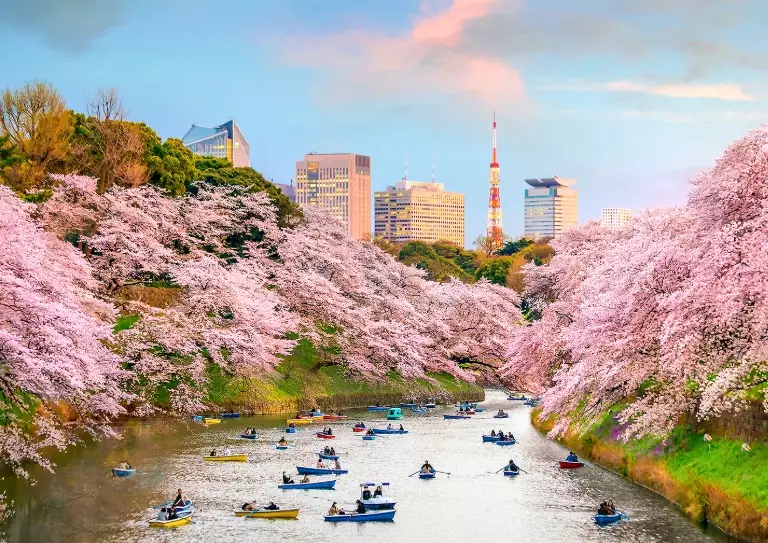
The paperwork is a hurdle, but it's the last one between you and an incredible experience in Japan. Take it one document at a time, use this guide as your roadmap, and you'll get there. Your trip to see the cherry blossoms, the ancient temples, the buzzing cities, and the serene countryside is worth this effort. Trust me, once you're holding that visa, all this hassle fades away, replaced by the excitement of the adventure to come.
Safe travels and happy planning!



Comments