Most people speeding by on the bullet train know Okayama for one thing: its nickname, "Sunny Kingdom." They might glance out the window, see the iconic black Okayama Castle, and think, "Maybe next time." That's a mistake. I lived in Japan for a decade, and Okayama City consistently surprised me with its depth. It's not just a sunny spot between Hiroshima and Osaka; it's a perfectly balanced blend of Edo-period elegance, bold contemporary art, and slow-living charm that many tourists completely overlook.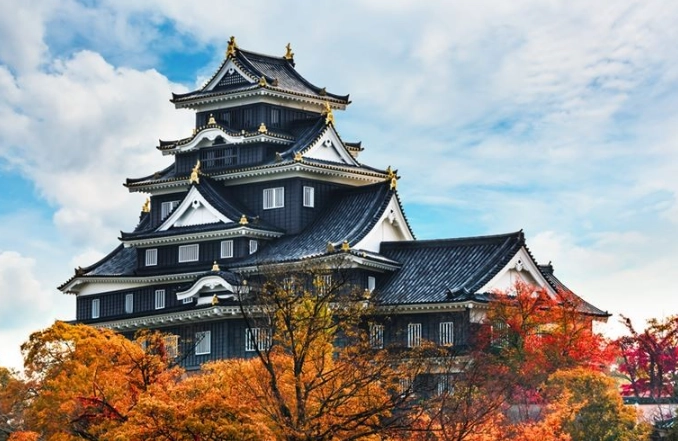
The heart of the city beats around two symbols: the lush, sprawling Korakuen Garden and the brooding "Crow Castle" beside it. But venture just a little further, and you're in the timeless canals of Kurashiki or on an island where art replaces people. The pace here is different. It's made for strolling, for sitting by a pond, for enjoying a peach-flavored treat without the crushing crowds of Kyoto.
Let's get into what actually makes Okayama worth your time, with the specifics you need to plan.
Your Quick Guide to Okayama's Highlights
Korakuen Garden: The Undisputed Star
Korakuen is regularly ranked among Japan's top three gardens. Unlike the intimate, rock-focused gardens of Kyoto, Korakuen feels expansive and democratic. It was built in the early 1700s for the local lord's pleasure, but also, notably, for the enjoyment of the common people. That spirit remains.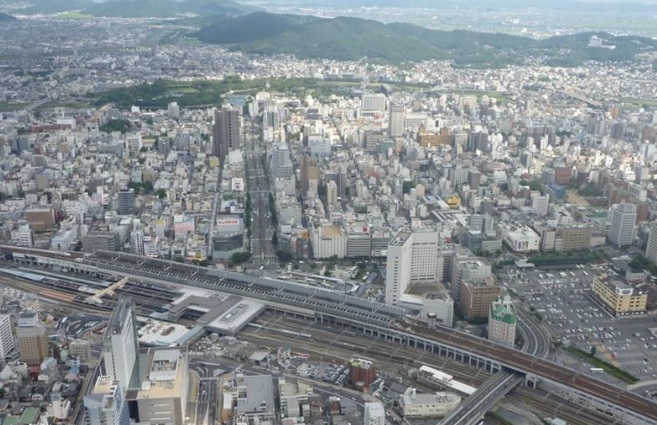
Don't just do the perimeter walk. The magic is in the details. Spend time at the Yuishinzan hill for the classic postcard view of the lawn, pond, and Okayama Castle in the background. But then, find the Ryuten pavilion, where a small stream flows through the building—you can sit inside and watch the water flow by. It's a genius design for a hot day.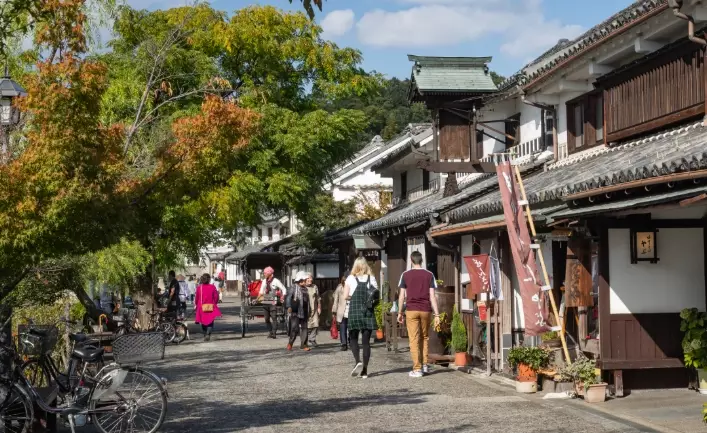
A common mistake? Rushing through in an hour. The garden's mood changes completely with the seasons: plum blossoms in February, vibrant green in May, fiery maples in November, and a serene, stark beauty in winter. If you can, visit during one of the seasonal evening illuminations.
Korakuen Garden: The Essentials
Address: 1-5 Korakuen, Kita-ku, Okayama City 703-8237
Hours: 7:30 AM - 6:00 PM (Mar-Sept), 8:00 AM - 5:00 PM (Oct-Feb). Last entry 15 mins before closing.
Admission: 410 yen for adults. A combined ticket with Okayama Castle is 640 yen, saving you 180 yen. Always get the combo.
Getting There: From Okayama Station's east exit, it's a 25-minute walk (pleasant), a 10-minute tram ride on the Higashiyama Line to "Shiroshita," or a short taxi ride.
Okayama Castle: The Black Contrast
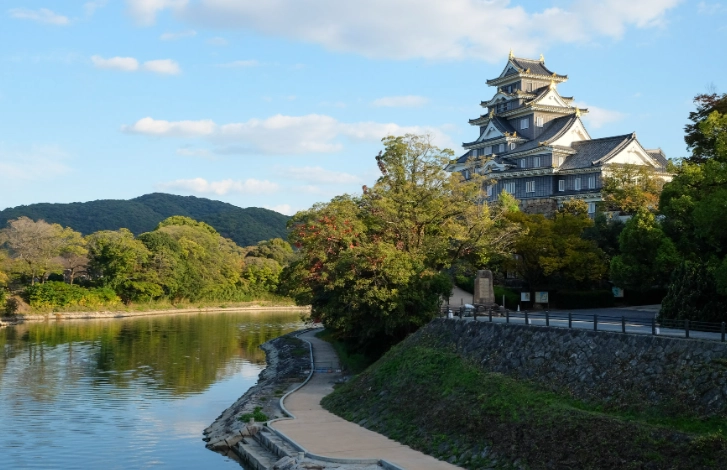
Standing right across the Asahi River from Korakuen, Okayama Castle (Okayama-jo) provides the perfect visual counterpoint. Its black lacquered boards earned it the nickname "U-jo" (Crow Castle), a deliberate contrast to Himeji's white "Heron Castle."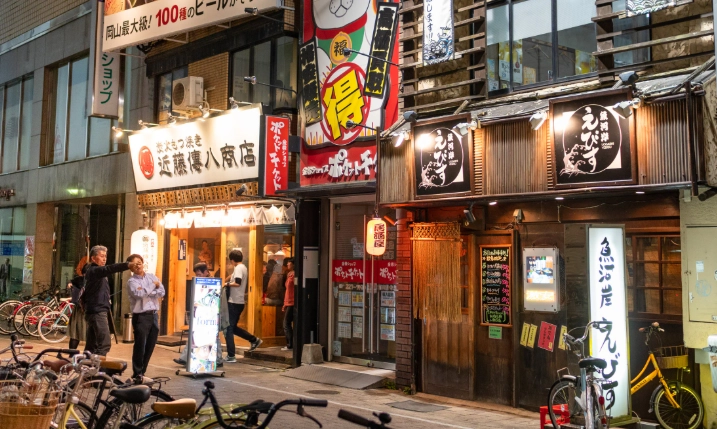
Here's the non-consensus part: the main keep is a concrete reconstruction from 1966. The original was destroyed in WWII. Purists might scoff, but the reconstruction is excellent. Inside, it's a modern museum—elevators and all—which makes it highly accessible. The exhibits on the castle's history and the Ikeda lords are engaging, but the real prize is the view from the top floor. Looking out over Korakuen Garden is the definitive Okayama photo-op.
You can also try on a replica feudal lord's costume or samurai armor for a photo. A bit touristy? Sure. But it's fun.
Tsukimi Yagura: The Often-Missed Original
While the main tower is new, make sure to walk to the back of the grounds to the Tsukimi Yagura (Moon-Viewing Turret). This small, elegant building is an original from 1620. It survived the war and gives you a tangible sense of the castle's true age. The contrast between it and the concrete keep tells the whole story of Okayama.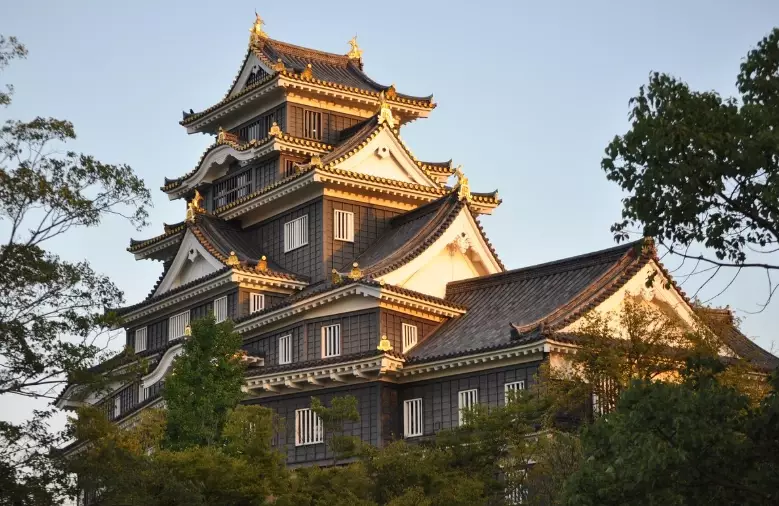
Kurashiki Bikan Quarter: A Step Back in Time
About a 15-minute train ride from Okayama Station, Kurashiki's Bikan Historical Quarter feels like a separate world. This was a major rice trading hub in the Edo period, and the wealthy merchants built storehouses (kura) along a willow-lined canal. The black-and-white walls, stone bridges, and sluggish boats are impossibly picturesque.
The main canal area can get busy with day-trippers. My advice? Wander the backstreets. The Kurashiki Ivy Square (an old red-brick factory complex turned into shops and a hotel) is a nice change of texture. The Ohara Museum of Art is worth it if you like Western art—it has originals by El Greco, Monet, and Gauguin, which was a huge deal when it opened in 1930.
One subtle error visitors make is treating Kurashiki as a quick 2-hour stop. To feel its atmosphere, you need to slow down. Have a coffee in a renovated kura, visit a denim shop (the area is famous for Japanese denim), and stay until the late afternoon when the tour groups thin out.
Naoshima & the Art Islands: A Day Trip Essential
This is the game-changer for Okayama. The city is the most convenient mainland gateway to Naoshima, Teshima, and Inujima—islands transformed into world-class open-air art museums. The Setouchi Triennale put them on the map.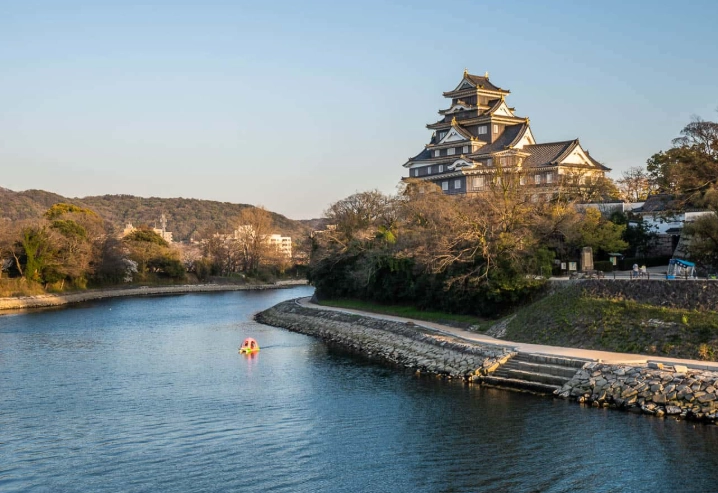
From Okayama Station, take a local train to Uno Port (about 45-50 minutes). Ferries to Naoshima run frequently (15-20 minute ride). A day trip is feasible, but it's a long, packed day. If your budget allows, staying overnight on Naoshima in a minimalist art hotel is an unforgettable experience.
On Naoshima, you can't miss:
- Benesse House Museum: Art, architecture, and stunning sea views fused together.
- Chichu Art Museum: A Tadao Ando concrete masterpiece built into a hill, housing a few Monet Water Lilies and works by James Turrell and Walter De Maria. Photography inside is prohibited—just experience it.
- Art House Project: Old houses in Honmura village turned into art installations.
- The Yellow Pumpkin: Yayoi Kusama's iconic polka-dot pumpkin on the pier.
Book museum tickets online in advance, especially for Chichu. They sell out.
What to Eat in Okayama City
Okayama Prefecture is a fruit kingdom. The white peaches (momo) are legendary—juicy, fragrant, and expensive. In summer, try peach soft serve, peach juice, or just buy a perfect peach from a department store basement depachika.
The local soul food is barazushi, a colorful scattered sushi with cooked ingredients like lotus root, shiitake, and egg mixed into the rice. It's homely, flavorful, and different from nigiri. Kibi dango is the signature sweet—chewy millet dumplings on a skewer, often enjoyed with green tea. You'll see them sold everywhere near the castle and garden.
For a casual meal, head to the Omotecho area near the station. It's packed with izakayas. One of my favorites is a tiny place specializing in freshly made gyoza—the owner has been making them by the window for 40 years. No fancy sign, just incredible food.
Building Your Okayama Itinerary
How long do you need? I argue for two full days minimum to appreciate the city without rushing.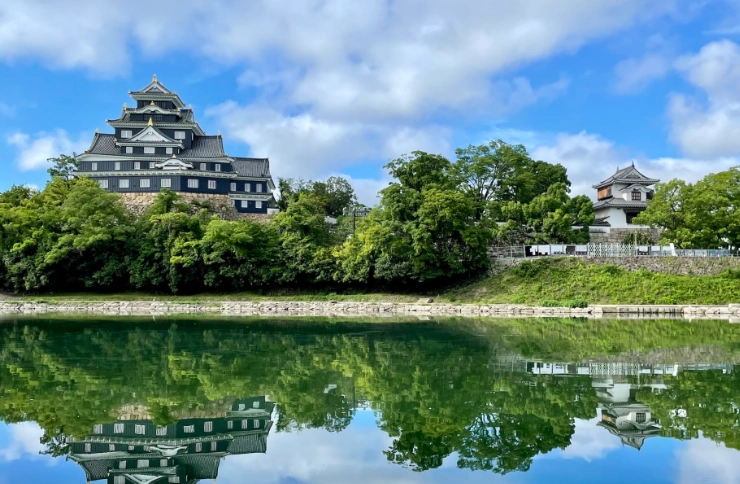
| Itinerary Focus | Day 1 (Classic Okayama) | Day 2 (Art & History) | If You Have a 3rd Day |
|---|---|---|---|
| Morning | Okayama Castle (opens at 9). Get the combo ticket. | Train to Uno Port, ferry to Naoshima. | Deep dive into Kurashiki. Visit the Archaeological Museum or the Rural Toy Museum. |
| Afternoon | Korakuen Garden. Have a slow stroll, find the pavilions. | Explore Benesse House and Chichu Art Museum areas. | Day trip to Bitchu Matsuyama Castle (Japan's highest mountaintop castle) or the quaint town of Takahashi. |
| Evening | Try barazushi for dinner. Walk along the Asahi River. | Return to Okayama. Izakaya dinner in Omotecho. | Relax. Maybe an onsen day trip to Misasa. |
Where to stay? For convenience, the area around Okayama Station is unbeatable. You have the Hotel Granvia Okayama right inside the station (mid-range), or several business hotels a 5-minute walk away. For a unique splurge, Ryokan Kurashiki in the heart of the Bikan Quarter offers a traditional stay.
Okayama Travel Questions Answered


Comments