Let's be honest. You search for the best places to visit in Japan, and you get the same list: Tokyo, Kyoto, Osaka, maybe Hiroshima. It's not wrong, but it's a starting point, not a plan. The real magic happens in the details—knowing which temple alley to wander down at sunset, which train pass actually saves you money, and how to see the famous spots without being swallowed by the crowd. I've been traveling to Japan for over a decade, and the mistakes I see first-timers make are almost always about timing and location. This guide is about turning that classic list into your perfect, personal itinerary.
Your Japan Travel Blueprint
- Tokyo: Where Neon Meets Tradition
- Kyoto: The Ancient Heart (and How to Navigate the Crowds)
- Mount Fuji & The Five Lakes: Seeing the Icon
- Osaka & Nara: The Flavor of Kansai
- Beyond the Golden Route: Hokkaido & Okinawa
- Practical Japan: Getting Around, Staying, and Timing It Right
- Your Japan Trip Questions Answered
Tokyo: Where Neon Meets Tradition
Tokyo isn't a city; it's a collection of wildly different villages, each with its own personality. Trying to "do Tokyo" is the first mistake. Pick a few districts that match your vibe.
Shinjuku & Shibuya: The Pulse
Yes, you'll see the Shibuya Crossing. It's chaotic and fun for about 15 minutes. For a better view, head to the Mag's Park Rooftop (attached to the Shibuya 109 building, 300 JPY) or grab a window seat at the Shibuya Sky observatory (advance booking essential, around 2200 JPY). Shinjuku's allure is in its layers. At street level, it's all department stores and the Godzilla Head on Hotel Gracery. Go down into the alleyways of Omoide Yokocho or Golden Gai for tiny, atmospheric bars. A pro tip? Most tourists stick to the east side. Shinjuku's west side, around the Metropolitan Government Building (free observatory!), feels like a different, more orderly city.
Asakusa & Ueno: Old Tokyo
Senso-ji Temple is packed. Go early, right at 6:00 AM when it opens, to hear the morning prayers and see the temple without the souvenir-stall crowds. The real charm of Asakusa is in the backstreets north of the temple, full of traditional craft shops and old soba noodle places. A 20-minute walk west along the Sumida River brings you to Tokyo Skytree. Book a timed ticket online. The view is undeniable, but if you're going to the Metropolitan Government Building in Shinjuku (free), decide if you need to pay for both.
A Hidden Favorite: Yanaka Ginza
If you want a slice of Showa-era Tokyo that survived the war and modernization, come here. It's a short, sloping shopping street near Nippori Station, lined with tiny shops selling fish cakes, sweet potato croquettes, and handmade crafts. There's no major landmark, just the feeling of a neighborhood that time forgot. Perfect for a relaxed afternoon.
Kyoto: The Ancient Heart (and How to Navigate the Crowds)
Kyoto suffers from its own beauty. The postcard images are real, but so are the tour groups. Strategy is everything.
- Fushimi Inari Taisha: Open 24 hours. Those thousands of vermilion torii gates? They cover a whole mountain. Everyone takes the same photo at the first dense cluster. My advice? Keep walking. The path splits and the higher you go, the quieter it gets. A full loop takes 2-3 hours, but even 45 minutes in gets you peace. Arrive by 7:30 AM for a semi-solitary experience.
- Kinkaku-ji (The Golden Pavilion): It's stunning. It's also a quick in-and-out experience. You follow a set path, see the pavilion across a pond, and exit. Worth it? Yes, but pair it with the quieter Ryoan-ji temple and its famous rock garden nearby to make the trip to northwest Kyoto worthwhile.
- Arashiyama Bamboo Grove: Another victim of its fame. The main path is a human highway by 9 AM. Go deep into the Okochi Sanso Villa (requires a 1000 JPY ticket) for a meticulously kept garden with bamboo views and no crowds, plus a free matcha tea. Or, cross the Togetsukyo Bridge and hike up to the Monkey Park Iwatayama for city views.
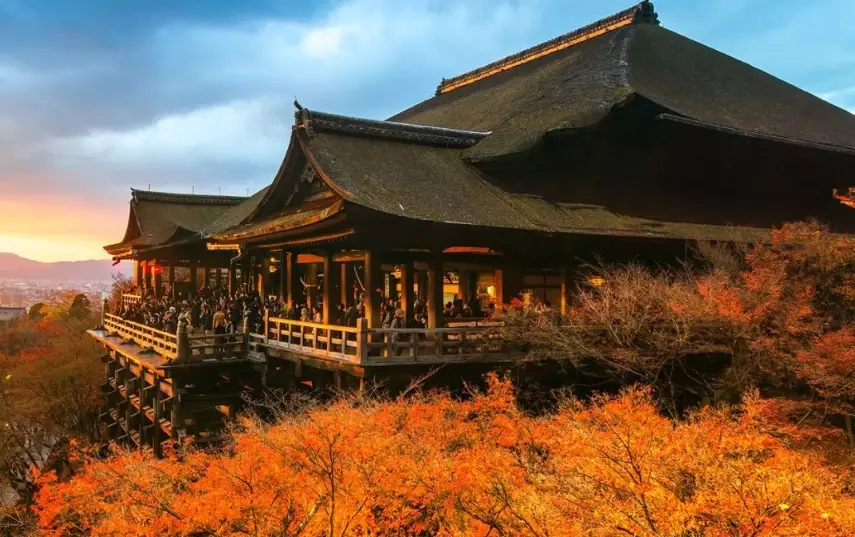
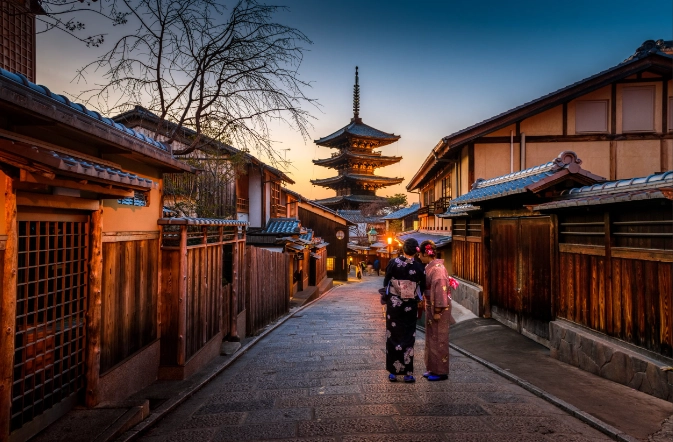
- Gion & Higashiyama: This is where you want to get lost. Put away the map in the streets between Kiyomizu-dera and Yasaka Shrine. The preserved lanes of Sannenzaka and Ninenzaka are charming (and crowded), but duck into the smaller alleys. Evening is the best time to feel the atmosphere, and you might spot a geiko or maiko rushing to an appointment.
Kyoto's buses are comprehensive but get stuck in traffic. For the eastern temples, renting a bicycle is a fantastic, flexible alternative.
Mount Fuji & The Five Lakes: Seeing the Icon
Seeing Mount Fuji is a matter of luck with the weather. Don't base your entire trip around it. The classic viewing area is the Fuji Five Lakes (Fujigoko) region, with Lake Kawaguchiko being the most accessible.
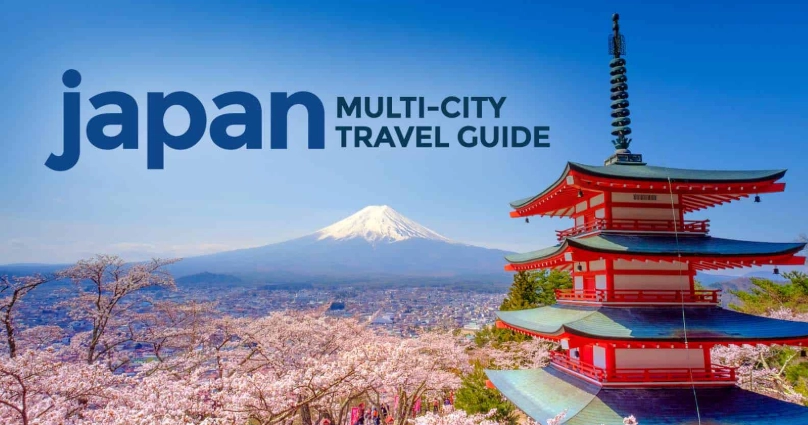
Chureito Pagoda: That iconic postcard shot of the pagoda with Fuji behind it? It's in Fujiyoshida City. It's a 20-minute climb up 400 steps from the station. The view is exactly as advertised. Best in clear morning light.
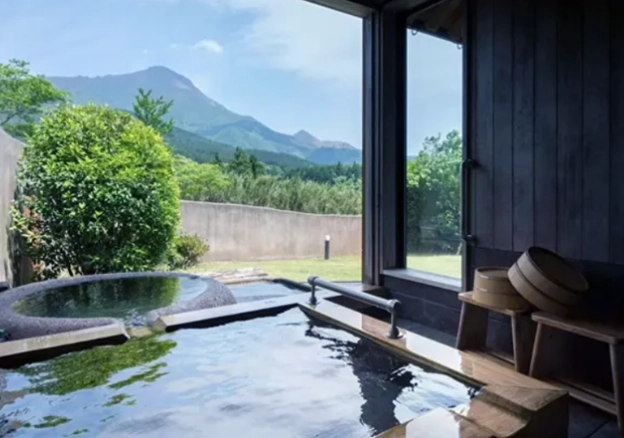
Hakone: Part of the Fuji-Hakone-Izu National Park, it's famous for the Hakone Loop (ropeway, pirate ship, cable car) which offers potential Fuji views, plus onsens (hot springs). The Open-Air Museum here is genuinely world-class, blending sculpture with mountain scenery. A 2-day Hakone trip from Tokyo is a great breather from city life.
If you just want a guaranteed glimpse, the shinkansen (bullet train) from Tokyo to Kyoto passes near Fuji on the right side (facing forward) about 40 minutes out of Tokyo. Book a window seat E.
Osaka & Nara: The Flavor of Kansai
Often treated as Kyoto's sidekicks, these cities are destinations in their own right.
Osaka is about eating and unfiltered energy. Dotonbori at night is a sensory overload of giant moving crab signs and takoyaki stalls. For street food, try Kuromon Ichiba Market. Osaka Castle is a concrete reconstruction, but the museum inside is excellent, and the park grounds are vast and lovely. For a unique view, the Umeda Sky Building Floating Garden Observatory is a striking piece of architecture.
Nara is a easy day trip from either Kyoto or Osaka. Todai-ji Temple houses the Great Buddha (Daibutsu) in the world's largest wooden building—the scale is humbling. The deer in Nara Park are cute but can be aggressive if they see food. Hold your maps tightly; they've been known to eat them. The lesser-visited Kasuga Taisha shrine, with its thousands of stone and bronze lanterns, has a more serene, mystical feel.
Beyond the Golden Route: Hokkaido & Okinawa
If you have more time or are on a repeat visit, these regions offer completely different experiences.
Hokkaido: Japan's northern frontier. In winter, it's for powder skiing in Niseko and the surreal Sapporo Snow Festival. In summer, it's rolling lavender fields in Furano, dramatic coastlines, and incredible seafood. Otaru, a canal city near Sapporo, is charming. It's a destination that requires a flight or a very long train ride from Tokyo.
Okinawa: A subtropical archipelago with a distinct Ryukyu culture. This is for beach life, world-class diving (the Kerama Islands are stunning), and a slower pace. The main island has the impressive Shuri Castle (reconstruction ongoing after a fire) and the Churaumi Aquarium with its massive whale shark tank. The outer islands like Ishigaki and Miyakojima offer even more pristine nature.
Practical Japan: Getting Around, Staying, and Timing It Right
This is where trips are made or broken.
Accommodation: Book well in advance, especially for peak seasons. Consider location over luxury. Being near a major train station (like Shinjuku, Ueno, or Kyoto Station) saves hours. Business hotels (Toyoko Inn, APA) are clean, tiny, and efficient. For a unique experience, spend one night in a ryokan (traditional inn) with kaiseki dinner and breakfast—it's pricey but memorable.
When to Go: Cherry blossoms (late Mar-early Apr) and autumn leaves (late Oct-Nov) are peak of peaks. Beautiful, crowded, expensive. Golden Week (late Apr/early May) and Obon (mid-August) are major domestic travel holidays—avoid if you can. My sweet spot is late October (fall colors start in the north) or late May, after Golden Week.
Money & Connectivity: Cash is still king in many smaller shops, restaurants, and temples. Get yen from 7-Eleven ATMs. For internet, rent a pocket WiFi device or buy a SIM card at the airport. It's non-negotiable for navigation.
Your Japan Trip Questions Answered
Ultimately, the best places to visit in Japan are the ones that resonate with you. Use this guide as a framework, then bend it. Get lost in a department store basement food hall (depachika), soak in an onsen, slurp raman at a midnight counter. Japan rewards the curious traveler. Your perfect itinerary isn't about checking boxes; it's about the moments between them.
Comments