Let's cut to the chase. For two people traveling together, $5000 USD is absolutely enough for a fantastic, comfortable week in Japan. It's not a shoestring, hostel-hopping budget, but it's also not unlimited luxury. It's the sweet spot for experiencing Japan's highlights without constant financial anxiety. I've done this trip multiple times, and the key isn't just the total number—it's how you allocate it. Most people blow their budget in two areas: last-minute flights and poor inter-city planning.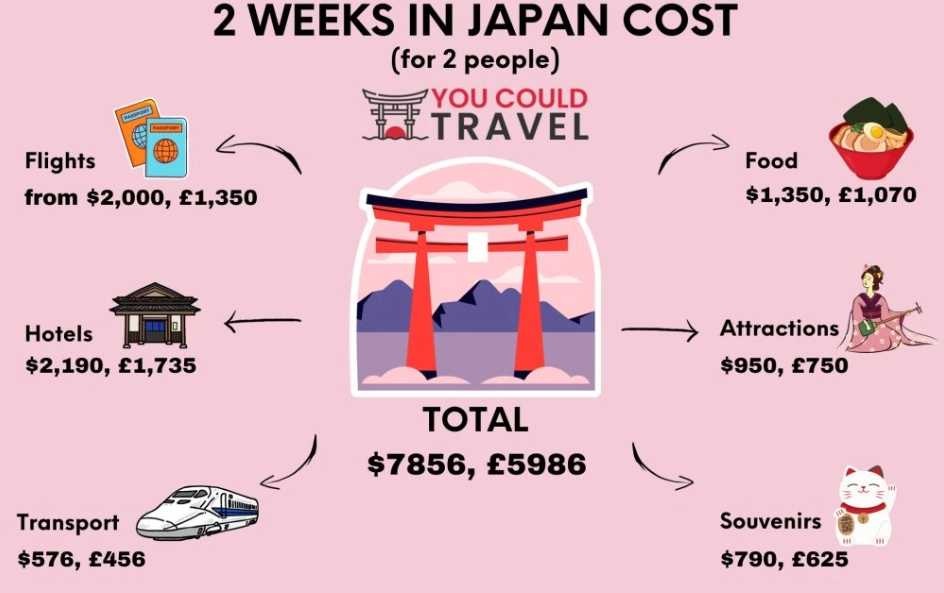
Your Quick Budget Guide
The $5000 Budget Breakdown (For Two People)
Here’s where the money actually goes. This is based on mid-range travel—think clean business hotels, a mix of casual and nice meals, and using the Shinkansen (bullet train). Prices are in USD for two people combined.
| Category | Estimated Cost (USD) | Details & Notes |
|---|---|---|
| Flights (Round-trip) | $1,600 - $2,200 | The biggest variable. Book 3-4 months out from major hubs (LAX, SFO, JFK). I paid $1850 from LAX in shoulder season. |
| Accommodation (6 nights) | $900 - $1,200 | Business hotels (APA, Dormy Inn) or 3-star hotels. ~$150-$200/night in Tokyo/Kyoto. |
| Japan Rail Pass (7-day) | $560 | For two 7-day Ordinary Class passes. Essential for this Tokyo-Kyoto-Osaka itinerary. |
| Local Transport & IC Cards | $140 | Suica/Pasmo cards for subways and buses in cities (~$70/person). |
| Food & Drink | $1,000 | $70/day per person. Covers ramen, conveyor-belt sushi, nice dinners, coffee, drinks. |
| Activities & Entry Fees | $300 | Temples, museums, gardens, maybe one special experience. |
| Souvenirs & Misc. | $300 | For snacks, gifts, and unexpected purchases. |
| TOTAL | $4,800 - $5,700 | You can hit the $5k target with careful flight shopping and mid-range choices. |
The bottom line: If you find flights for around $1800, stay in business hotels ($900), and follow the spending above, you'll land at $4,800. That leaves a $200 buffer, which is smart. The budget gets tight if your flights are $2400 and you insist on a fancy ryokan every night.
A Realistic 7-Day Tokyo-Kyoto-Osaka Itinerary
This classic "Golden Route" fits perfectly within a week and our budget. It balances iconic sights with local flavor. We'll activate the 7-day Japan Rail Pass on the morning of Day 2.
Day 1 & 2: Tokyo – Arrival & Exploration
Accommodation: Hotel in Shinjuku or Shimbashi (e.g., Hotel Gracery Shinjuku – Godzilla head on the roof, great location, rooms are small but clean, ~$170/night).
Day 1: Arrive at Narita/Haneda. Take the Narita Express (N'EX) or limousine bus to your hotel (~$25-30/person). Check-in, fight jet lag with a walk. Evening in Shinjuku: Omoide Yokocho ("Piss Alley") for yakitori.
Day 2: Morning at Senso-ji Temple in Asakusa (free). Afternoon in Akihabara for electronics/anime or Harajuku for Takeshita Street. Evening in Shibuya for the scramble crossing and Hachiko statue.
Food Budget Day: Breakfast combini pastry ($3), lunch ramen at Ichiran ($10), dinner yakitori ($25). Total ~$38/person.
Day 3: Tokyo to Kyoto via Shinkansen
Morning: Check out, store bags at Tokyo Station. Quick visit to the Imperial Palace East Gardens (free). Grab an ekiben (station lunch box) for the train.
Afternoon: Take the Hikari Shinkansen to Kyoto (2.5 hours, covered by JR Pass). Check into a hotel near Kyoto Station (e.g., Hotel Keihan Kyoto Grande, ~$160/night). Evening explore Fushimi Inari Shrine. Go later to avoid crowds—it's open 24/7 and beautifully lit.
Insider Transport Tip: From Kyoto Station to Fushimi Inari, take the local JR Nara Line (2 stops, 5 minutes, covered by JR Pass). Don't waste money on the subway or taxi.
Day 4: Kyoto's Highlights
Full day of temples. Buy a Kyoto City Bus One-Day Pass (~$6).
Morning: Kinkaku-ji (Golden Pavilion, entry ~$4).
Afternoon: Arashiyama area. See the bamboo grove (free), Tenryu-ji temple garden (~$5).
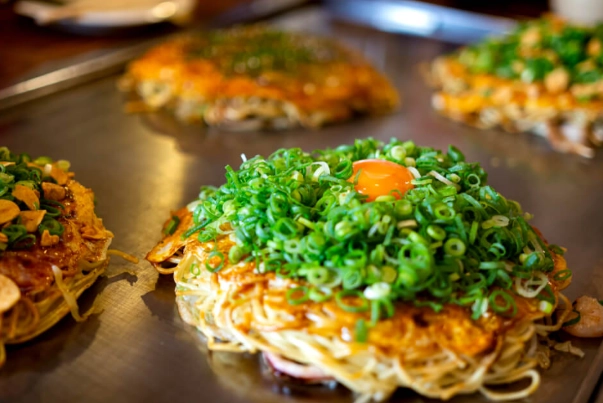
Evening: Gion district. Wander Hanamikoji Street. Spotting a geisha is rare, but the atmosphere is perfect. Dinner at a katsu or okonomiyaki restaurant.
Day 5: Kyoto to Osaka (Day Trip)
Use your JR Pass for a 30-minute train to Osaka. Leave luggage in Kyoto hotel.
Morning: Osaka Castle (grounds free, museum entry ~$6).
Afternoon/Evening: Dotonbori. This is the food heart of Japan. Try takoyaki, kushikatsu, and the famous Glico Running Man sign. Shinsekai district has a retro, slightly gritty charm and great kushikatsu joints. Return to Kyoto for the night.
Why stay in Kyoto? Hotels are often slightly cheaper and quieter than central Osaka, and the JR Pass makes the commute trivial.
Day 6: Nara Half-Day & Return to Tokyo
Morning: JR train from Kyoto to Nara (45 mins, covered by JR Pass). Feed the famous bowing deer in Nara Park (deer crackers ~$2). See Todai-ji Temple and its giant Buddha (~$6).
Afternoon: Return to Kyoto, pick up luggage. Take the Shinkansen back to Tokyo. Check into a hotel near Tokyo Station for an easy airport transfer tomorrow.
Last Night Dinner: Splurge a little. A good tonkatsu or shabu-shabu dinner can run $40-50 per person but is worth it.
Day 7: Departure
Last-minute souvenir shopping at Tokyo Station's character street or department store basements. Take the N'EX or limousine bus back to the airport.
Expert Tips to Stretch Your Yen Further
Here's where my experience pays off. These aren't the generic "eat at 7-Eleven" tips.
Other quick wins: Lunch is your luxury meal. Many high-end restaurants offer spectacular set lunches (teishoku) for half the dinner price. Conveyor-belt sushi (kaiten-zushi) like Sushiro or Kura Sushi is fresh, fun, and incredibly cheap—you can eat well for $15. For coffee, skip Starbucks and try Doutor or local kissaten.
Your Japan Budget Questions Answered
 Does the $5000 budget include shopping for electronics or designer goods?
So, is $5000 enough for a week in Japan? The answer is a confident yes, provided you plan with intention. It demands you make choices—business hotel over boutique, a great lunch over an extravagant dinner—but it never forces you to miss out on what makes Japan incredible: the food, the culture, the precision, and the sheer energy. Book those flights early, get the JR Pass, embrace the cash, and you're set for an unforgettable trip that won't break the bank.

Comments