Reptile Enclosure Size Chart: Avoid Deadly Mistakes
- Date
- Updated
- Updated 2026-11-26
- Reads
- 0 x
Here's What I Cover in This Guide
I've been keeping reptiles for over a decade, and the number one thing I see new owners get wrong is enclosure size. They either buy a tiny tank because a pet store said it was 'fine,' or they go massive without thinking about the animal's stress levels. The truth? A reptile enclosure size chart is only useful if it's species-specific — and most generic charts floating around online are dangerously vague. This guide fixes that.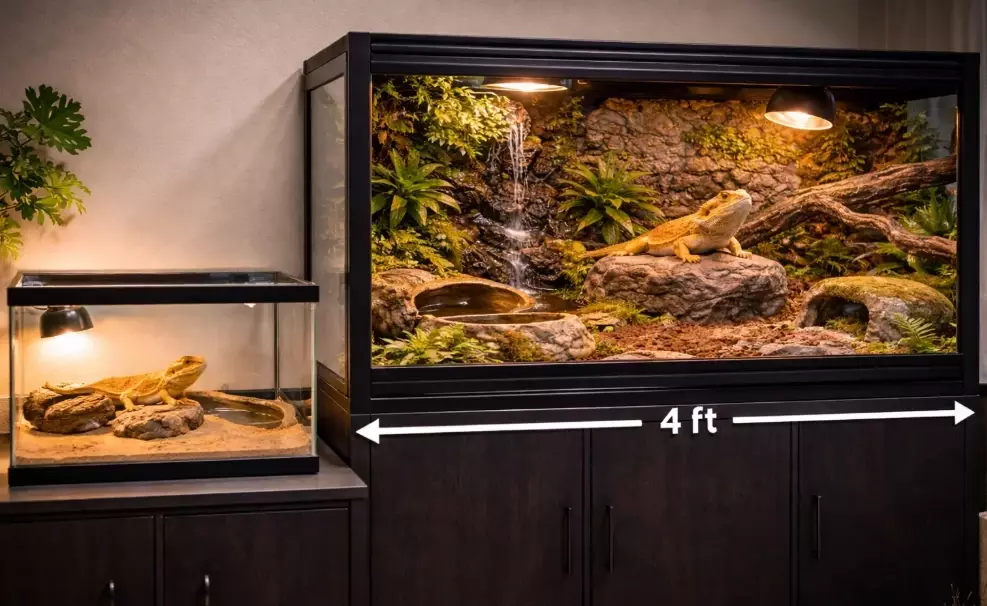
What Is a Reptile Enclosure Size Chart (and Why Most Are Wrong)
A proper chart doesn't just list tank dimensions. It factors in the animal's adult length, activity level, and natural territory range. I've seen charts that recommend a 20-gallon tank for a bearded dragon — that's borderline cruel. A real chart should tell you the minimum for survival and the ideal for thriving. The difference matters more than most people realize.
One non-consensus point: many keepers obsess over floor space but forget about height. Arboreal species like crested geckos need vertical room, not just width. I learned this the hard way with my first crested — she stopped eating for two weeks in a long, low tank. Swapped to a taller enclosure and she bounced back in days.
Minimum Enclosure Size by Species: The Real Chart
Here's the chart I wish I'd had when I started. These are adult minimums — juveniles can start smaller, but plan for the upgrade before you buy.
| Species | Minimum Floor Space (L×W) | Minimum Height | Tank Size Equivalent | Key Note |
|---|---|---|---|---|
| Bearded Dragon | 120 cm × 60 cm | 60 cm | 75–120 gallons | Needs digging space; wider is better than taller |
| Leopard Gecko | 90 cm × 45 cm | 30 cm | 40–50 gallons | Floor space matters more than height |
| Crested Gecko | 45 cm × 45 cm | 90 cm | 30–40 gallons (tall) | Height is critical; add horizontal vines |
| Ball Python | 120 cm × 60 cm | 45 cm | 75–120 gallons | Security > space; clutter the tank |
| Corn Snake | 90 cm × 45 cm | 45 cm | 40–75 gallons | Escape artist; lid security is non-negotiable |
| Blue Tongue Skink | 120 cm × 60 cm | 40 cm | 75–100 gallons | Needs deep substrate for burrowing |
Notice the range for tank size equivalents? That's intentional. A 75-gallon could be long and shallow or shorter and deep — shape matters as much as volume. Always prioritize floor area for terrestrial species and height for arboreal ones.
How to Measure an Enclosure for Your Reptile
Grab a tape measure and check internal dimensions, not external. I can't tell you how many people buy a '40-gallon' tank only to find the glass thickness eats up usable space. Measure the inside glass-to-glass.
Here's my three-step method:
- Step 1: Measure the reptile's adult length (look up species average, not your juvenile's current size).
- Step 2: The enclosure length should be at least 2× the adult length (3× for very active species like monitors).
- Step 3: Check width — it should be at least 1× the adult length so the animal can turn around without bending.
Example: My adult corn snake is 110 cm. Her tank is 120 cm long, 50 cm wide. That's just over the 2× rule for length. She uses every inch.
Pro tip from my vet: For snakes, add 10 cm to the width for every 30 cm of adult length beyond 60 cm. This prevents spinal curvature from cramped turning.
Common Mistakes I See Every Week
Using the 'inch per gallon' rule. That's for fish, not reptiles. A 20-gallon tall tank has the same floor space as a 10-gallon long — but a bearded dragon needs the long one. Volume is a terrible metric.
Buying for the baby, not the adult. Your baby bearded dragon fits in a 20-gallon. Six months later it's cramped and stressed. Plan for adult size from day one — or know exactly when you'll upgrade.
Ignoring enrichment space. A tank that's bare minimum means the animal is constantly on edge. I always recommend 20–30% more than the minimum if your budget allows. My leopard gecko's tank is 50% larger than the chart minimum, and his activity level shot up noticeably.
Negative experience I'll admit: I once kept a rescue ball python in a 40-gallon because the previous owner said it was 'fine.' He stopped feeding for a month. A vet told me the tank was too open and exposed — not too small. Sometimes the issue isn't size, it's clutter. Lesson learned: a bigger tank with no hides is worse than a smaller tank with proper cover.
Expert Answers to Your Sizing Questions
This guide reflects my personal experience keeping and rehabilitating reptiles, cross-checked against species care sheets from the Association of Zoos & Aquariums and the British & Irish Association of Zoos and Aquariums. Always consult a herp vet for species-specific health concerns.
Related
Reptile Feeding Schedule: Avoid Deadly Mistakes
Struggling to figure out the right reptile feeding schedule for your pet? Learn species-specific timing, prey size rules, and the mistakes that cause regurgitation or obesity in captive reptiles.
Ball Python Care: Setup, Feeding & Handling Done Right
Struggling with a picky eater or a ball python that won't use its hide? This ball python care guide covers the enclosure tweaks, feeding tricks, and handling habits that actually keep these snakes thriving long term.
Reptile Shedding Problems: Why Your Gecko or Snake Stuck Shed
Struggling with a reptile shedding problems? Learn why your gecko or snake leaves stuck shed, the exact humidity and vitamin fixes I use, and when dysecdysis needs a vet visit.
Comments