Reptile Humidity Requirements: Avoid Shedding & RI Mistakes
- Date
- Reads
- 7 x
Quick Jump: What I've Learned After 10 Years
I've killed a beautiful Brazilian rainbow boa by trusting a cheap analog hygrometer. That was a hard lesson. The dial read 65% while the real level hovered around 40%. The snake had a terrible shed, retained eye caps, and I thought the gadget was fine.
So when people ask me about reptile humidity requirements, I don't start with percentages. I start with the fact that your hygrometer is probably lying to you. And that's before we even get to species differences.
Here's the short version: most tropical species need 60–80% relative humidity, desert species thrive at 30–50%, and the real danger zone isn't the daily high or low — it's the constant swinging. But the species table below gets into specifics, because a leopard gecko and a crested gecko are not remotely the same conversation.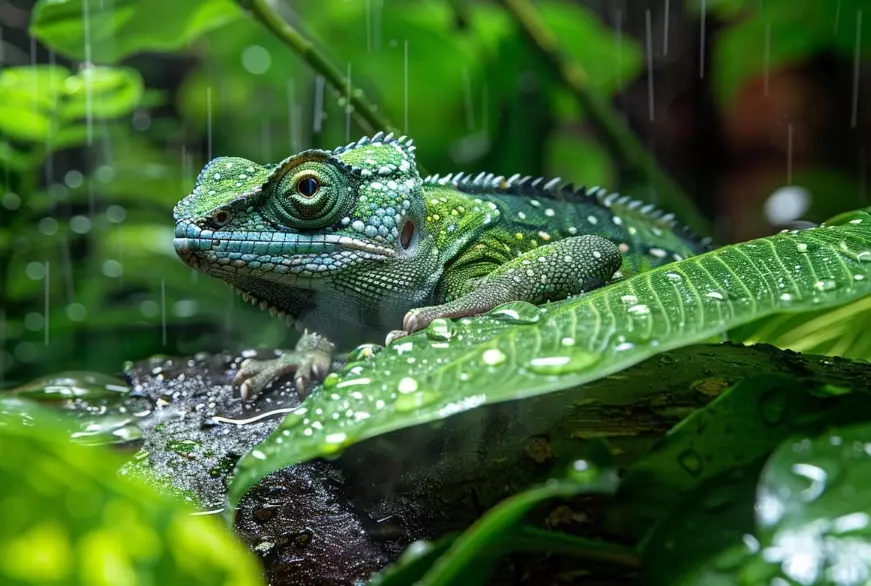
Species-by-Species Humidity Cheat Sheet
This is the table I wish I'd found years ago. I've kept most of these species myself. The numbers come from my own monitoring plus cross-referencing the care sheets published by the British Herpetological Society and the Association of Reptile Keepers.
| Species | Daytime Humidity Range | Nighttime Humidity Range | Key Detail I've Noticed |
|---|---|---|---|
| Leopard gecko | 30–40% | 40–50% | They need a humid hide, not a humid tank. A dry tank with a damp hide works better than a uniformly humid tank. |
| Bearded dragon | 30–40% | 40–50% | Morning misting before lights come on helps. Misting mid-day with hot lights running is a respiratory infection waiting to happen. |
| Ball python | 50–60% | 65–80% | They crash when humidity falls below 45% during shed. A large water bowl near the heat source works better than misting. |
| Crested gecko | 50–70% | 70–90% | Nighttime spikes matter more than daytime averages. They're active and hydrated at night when the humidity climbs. |
| Blue tongue skink | 40–60% | 50–70% | Substrate choice does more than misting. Coco coir mixed with sand holds humidity without getting soggy. |
| Green tree python | 60–70% | 75–90% | Airflow is the hidden variable. High humidity with stagnant air leads to blisters faster than low humidity does. |
| Corn snake | 40–50% | 50–60% | Bump to 70% during shed. For the rest of the cycle, they do fine at the lower end. |
| Red-eared slider (aquatic) | 50–70% | 50–70% | Basking area humidity matters as much as water. A dry basking dock at 30–40% humidity gives them a chance to dry off. |
A quick note on that table: I left out chameleons on purpose. They're a different beast, and lumping them into generic reptile humidity requirements does more harm than good. Veiled chameleons, for instance, need a massive nighttime humidity spike (80–100%) paired with strong daytime drying. That's a whole separate article.
How Do You Measure Reptile Humidity Without Fooling Yourself?
Most people stick a dial hygrometer on the back wall and call it done. I did that for two years. The readings were garbage.
Here's a test you can run in five minutes. Put two digital hygrometers side by side in the same spot in your enclosure. Wait an hour. If they read more than 5% apart, at least one is wrong. In my experience, cheap analog dials can be off by 20% or more.
What actually works for me:
- Two digital hygrometers — one on the cool side, one on the warm side. Humidity gradients matter. A single reading tells you almost nothing.
- Calibration check — the salt test. Seal a hygrometer in a container with a small cup of damp salt for six hours. A working unit should read 75%. Mine read 58% out of the box. That's a 17-point lie.
- Probe placement — put the sensor at the height where your animal actually spends time. Ground-dwelling geckos experience different humidity than arboreal snakes. A sensor velcroed to the ceiling of a tall enclosure is measuring the wrong air.
The detail nobody mentions: your hygrometer should sit near the substrate, not mid-wall. Humidity is heavier than dry air and settles low. I've seen enclosures where the bottom third was 75% and the top was 45%. The snake lived on the bottom. The keeper kept reading the top and wondering why the shed was bad.
Why Shedding Problems Almost Always Trace Back to Humidity
When a reptile has a bad shed — patchy skin, retained eye caps, stuck toe tips — the first suspect is humidity. Not always, but most of the time.
Snakes and lizards don't shed evenly without adequate moisture. The old skin needs to separate from the new skin, and that process depends on hydration from the inside and humidity from the outside.
Here's the trick I use during shed cycles: I don't wait until I see milky eyes. I bump humidity as soon as the animal goes into the blue phase — the dull, grayish look before shedding. Waiting until the skin is already stuck is too late. A retained eye cap, in particular, can cause serious problems if you try to peel it off yourself.
What I do:
- Raise humidity 10–15% above normal for the duration of the shed cycle
- Offer a humid hide with damp sphagnum moss — a plastic tub with a hole cut in the lid, placed over the heat mat
- Skip the bath unless the shed is already stuck — soaking before the shed actually starts doesn't help and can stress the animal
One more thing: a stuck shed on the tail tip can cut off circulation. I check tail tips and toe tips first when a shed fails. That's where things go bad fastest.
Misting Mistakes That Cause Respiratory Infections
Misting seems simple. Spray water, humidity goes up. But the way most people do it — a heavy spray with the heat lamp running and no ventilation — creates a swamp. That's how you get respiratory infections.
I learned this after a vet visit that cost me more than the terrarium itself. The vet explained that warm, wet, stagnant air is the ideal environment for bacteria. Your reptile's lungs aren't designed for it. High humidity with zero airflow is worse than moderate humidity with good ventilation.
Watch out for this: misting late in the evening while the heat lamp is still on. The water evaporates fast, the enclosure turns into a sauna, and the humidity spikes to 90% with no fresh air. I mist in the morning before lights come on, or right after they go off. Never in the middle of the light cycle.
What I do now:
- Mist the enclosure walls, not the animal — spraying directly on the reptile encourages skin problems
- Keep an eye on ventilation — mesh tops help, but don't cover all of it to raise humidity. Air exchange matters more than hitting a specific number.
- Use a drainage layer — a layer of hydro balls under the substrate stops water from pooling and going sour
If a reptile is wheezing, has stringy mucus around the nostrils, or keeps its head elevated while resting, those are signs of a respiratory infection. Get it to a vet. Adjusting humidity won't fix an infection that's already set in.
Player Questions I Get Every Week
My hygrometer says 50% but my ball python still has a bad shed. What am I missing?
The number on the wall isn't the number that matters. Your snake spends most of its time in a hide, and hides have their own microclimate. If the hide is on a heat mat and dry, the humidity inside that hide could be 30% while the wall reads 50%. I put a small digital hygrometer inside the humid hide during shed cycles. That reading is the one that actually matters.
Can I just use a room humidifier for my reptile enclosure?
For a single tropical enclosure in a dry room, a room humidifier works better than I expected. The catch is that it raises the whole room's humidity, which can cause mold in your walls if you're not careful. I run one for my crested geckos in winter. I keep a hygrometer in the room as well as one in the tank. When the room hits 55%, I turn it off.
My leopard gecko's tank is at 35% but she keeps rubbing her nose on the glass. Is that humidity-related?
Nose rubbing is more likely a sign of stress or a need for more space than a humidity issue. Leopard geckos can hit 30% without problems as long as there's a proper humid hide. What I'd check first is whether the enclosure is too small or too open. They don't like wide-open spaces with no cover. A dry tank with a humid hide is normal for this species. Nose rubbing usually isn't.
How long does it take for a reptile to recover from dehydration-related shedding issues?
The bad shed itself clears with the next cycle if you fix the humidity. But the damage from a retained eye cap or restricted tail tip can take longer. I've seen a stuck tail tip kill the end of a gecko's tail. That doesn't heal back. The skin does recover in one or two sheds, but don't expect the animal to look perfect immediately. Get the humidity stable first, then wait it out.
Do I need different humidity during the day and night?
Yes, for most species. Nighttime humidity spikes are normal in wild environments. Crested geckos, for example, do well with 50–70% during the day and 70–90% at night. But this is where people overcorrect: they run a fogger all night and wake up to condensation on the glass. That's too much. A spike in the evening that settles by morning is what you want. Constant high humidity is a problem, not a goal.
None of this is complicated. Measure with a tool that isn't broken. Give your animal a gradient — a dry area and a humid area — so it can choose. Watch the shed cycle instead of waiting for a problem to appear. That's most of reptile humidity requirements right there. The rest is species-specific detail, and that table up top covers the big ones.
This article was fact-checked against care guidelines from the British Herpetological Society and the Association of Reptile Keepers. I've kept the species listed here personally, with the exception of the green tree python, which I monitored in a colleague's collection over two breeding seasons.

Related
Reptile UVB Lighting: Fix Metabolic Bone Disease Fast
Struggling with your reptile's sluggish behavior or soft bones? Learn how to choose the right UVB bulb, set the correct distance, and avoid the most common lighting mistakes that lead to metabolic bone disease.
Amphibian Care for Beginners: Avoid Rookie Mistakes
Wondering why your new frog or salamander keeps hiding or won't eat? Get real amphibian care for beginners tips from someone who's made the mistakes—proper housing, feeding, and handling without the fluff.
Ball Python Care: Setup, Feeding & Handling Done Right
Struggling with a picky eater or a ball python that won't use its hide? This ball python care guide covers the enclosure tweaks, feeding tricks, and handling habits that actually keep these snakes thriving long term.
Comments